
The San Clemente Train: Noise, Commute, and the Coastal Trade-Off Buyers Debate
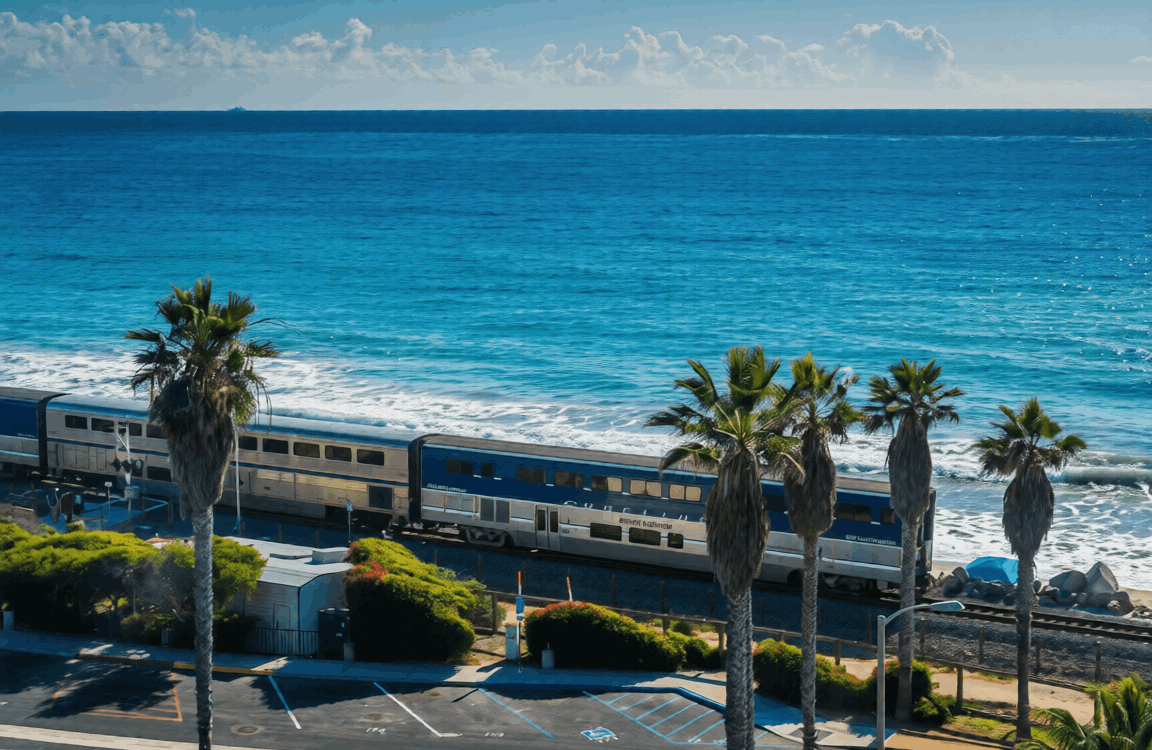
Is the San Clemente train a dealbreaker or an asset?
It depends entirely on the home. The rail line runs right along the San Clemente shore, so train presence is real, but the experience varies with how close a home sits to the tracks and to a crossing. North Beach vehicular crossings have been a quiet zone since 2011, while the pedestrian crossings along the beach trail are noisier, and the same line gives residents a coastal Metrolink commute and the beach trail itself. Most buyers who hear it on a good day decide it is a trade-off rather than a dealbreaker.
No single feature in San Clemente gets argued about more than the train. Stand on a bluff-top patio with one buyer, and the rail line below is a romantic detail, the sound of the coast, a ride to the beach or the city. Stand there with the next buyer, and it is a flaw to be priced down. The truth is that both of them are partly right, and which one is more right depends on the specific home they are standing in front of.
This piece is written to let you reach your own verdict instead of inheriting someone else's. It walks through what actually runs on the line, the noise question answered honestly by location, the real shape of a coastal rail commute, and the way the tracks both block and create access to the sand. None of it is meant to talk you into or out of a beachside home. It is meant to let you buy one knowing exactly what the line will mean from your particular front door. For the wider view of the city and its neighborhoods, start with my San Clemente communities guide.
What actually runs on the line
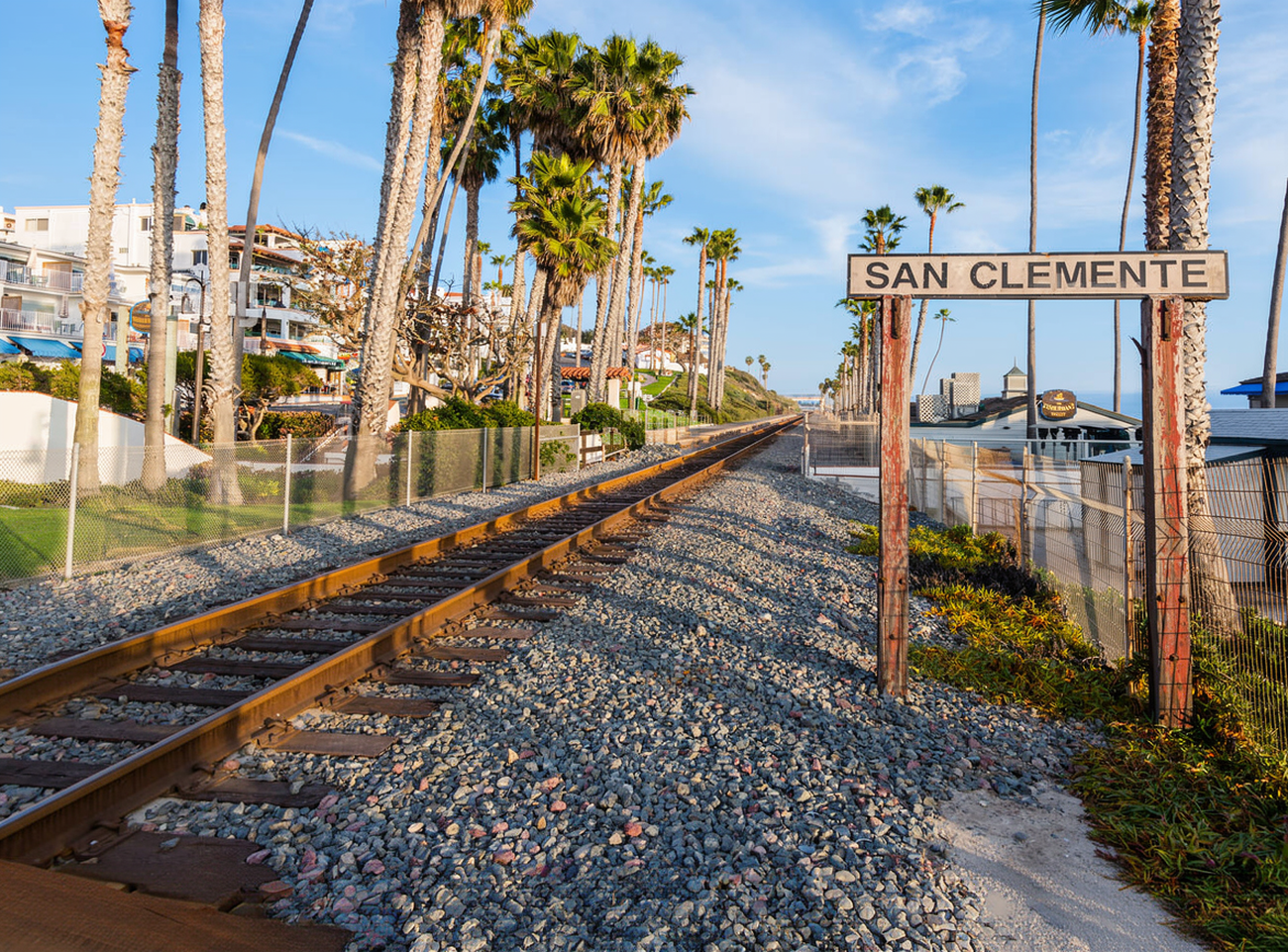
The tracks along the San Clemente shore are part of a busy regional rail corridor that hugs the coast, so close in places that the rails nearly touch the sand. Metrolink commuter trains and Amtrak Pacific Surfliner trains both use it, along with occasional freight. For a resident, that means a mix of passenger trains through the day rather than a constant stream, but it also means the corridor is an active, working rail line, not a scenic relic.
San Clemente has two Metrolink stations, and the difference between them matters. The station known locally as North Beach, listed by Metrolink simply as San Clemente, sits at the northern edge of town and operates as the regular station. The San Clemente Pier station, in the middle of the beachfront near the pier, is open only on weekends. So a buyer imagining a daily train commute is really talking about the North Beach station, while the Pier station is more of a weekend and beach-day amenity.
The noise question, answered honestly
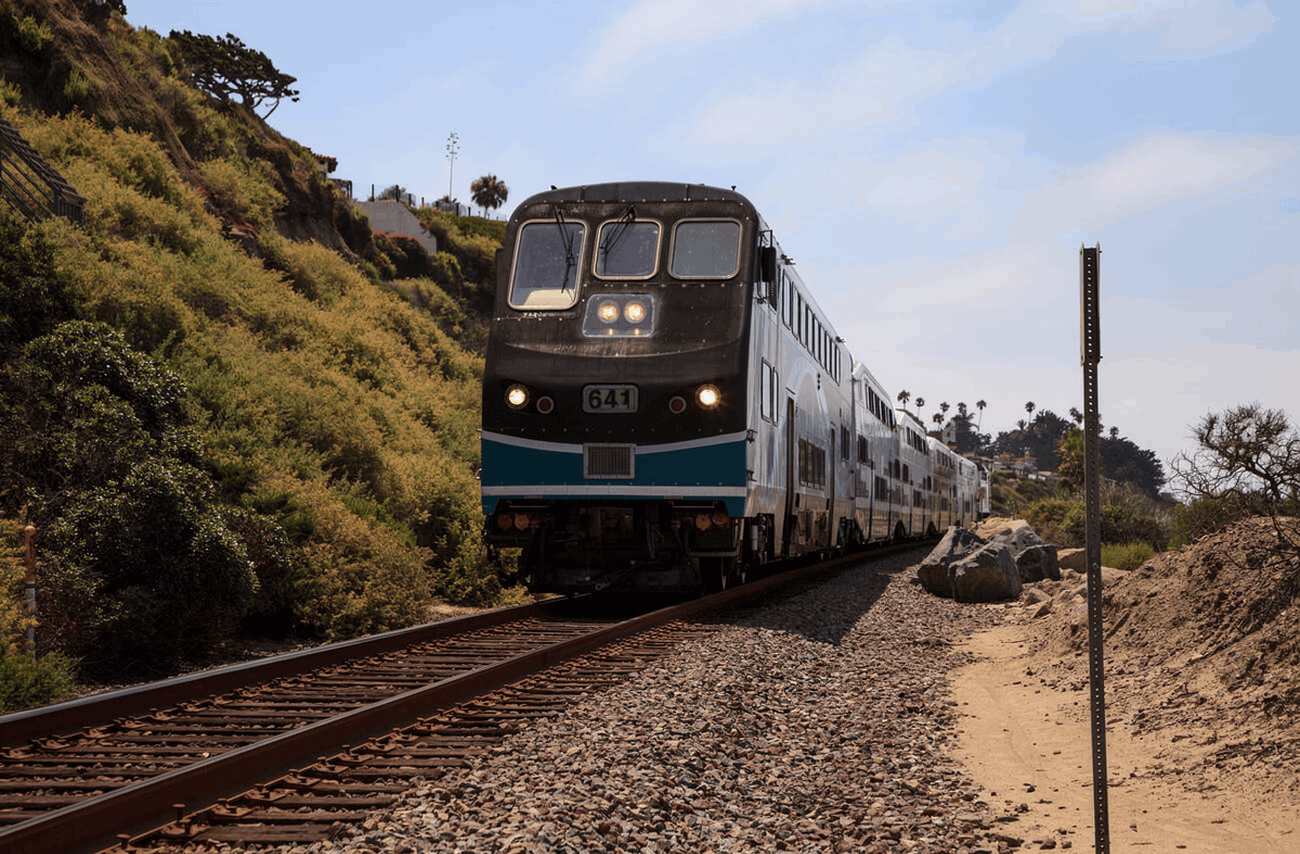
Train noise in San Clemente comes in two forms, and buyers tend to blur them. The first is the rolling sound of the trains themselves passing along the shore. For any home close to the tracks, that is simply part of the soundscape, more present near the rails and fading with distance and elevation up the bluff. The second is the horn, and the horn is where the real story lives.
The common myth runs in two opposite directions. Some buyers assume the trains blast their horns constantly all along the coast. Others hear the words quiet zone and assume the line is silent. Neither is accurate. The vehicular crossings at North Beach were established as a quiet zone in 2011, with safety equipment that lets trains pass without routinely sounding their horns there. That quiet zone program, however, applied to the vehicular crossings, not to the pedestrian crossings that dot the beach trail. Efforts to extend quieter treatment to the pier area pedestrian crossing met resistance over the years, so horns have continued to sound in parts of the beachfront. And under the rules that govern all of it, a train conductor can always sound the horn or bell when they judge it necessary for safety, which near a pedestrian beach crossing happens more than near a fully equipped vehicular one.
Put together, the honest answer is that horn noise is highly local. A home near a North Beach vehicular crossing lives a quieter version of the line than a home near the pier or near one of the pedestrian crossings on the beach trail. This is exactly why a buyer cannot accept a blanket verdict about the San Clemente train. The only verdict that counts is the one you reach standing on the specific property while a train goes by.
The commute, what it really is
The upside that train skeptics underrate is the commute. From the North Beach station, Metrolink runs up the coast and inland toward the job centers of the county and beyond, and the Amtrak Pacific Surfliner along the same corridor opens up trips down the coast as well. For the right rider, starting a workday or a city evening with a coastal rail ride instead of a freeway crawl is a genuine quality-of-life gain, and it is a real reason some buyers seek out a home near the line rather than away from it.
The honest caveat is that this corridor is not a high-frequency subway. It runs a relatively modest number of trains a day, and it has been subject to closures when coastal erosion and bluff movement have forced emergency repairs. For most households, that makes the train a valuable complement to a car rather than a replacement for one. A buyer counting on the train as a primary commute should look hard at the current schedule and the corridor's recent service history before building a life around it.
The beach trail trade-off
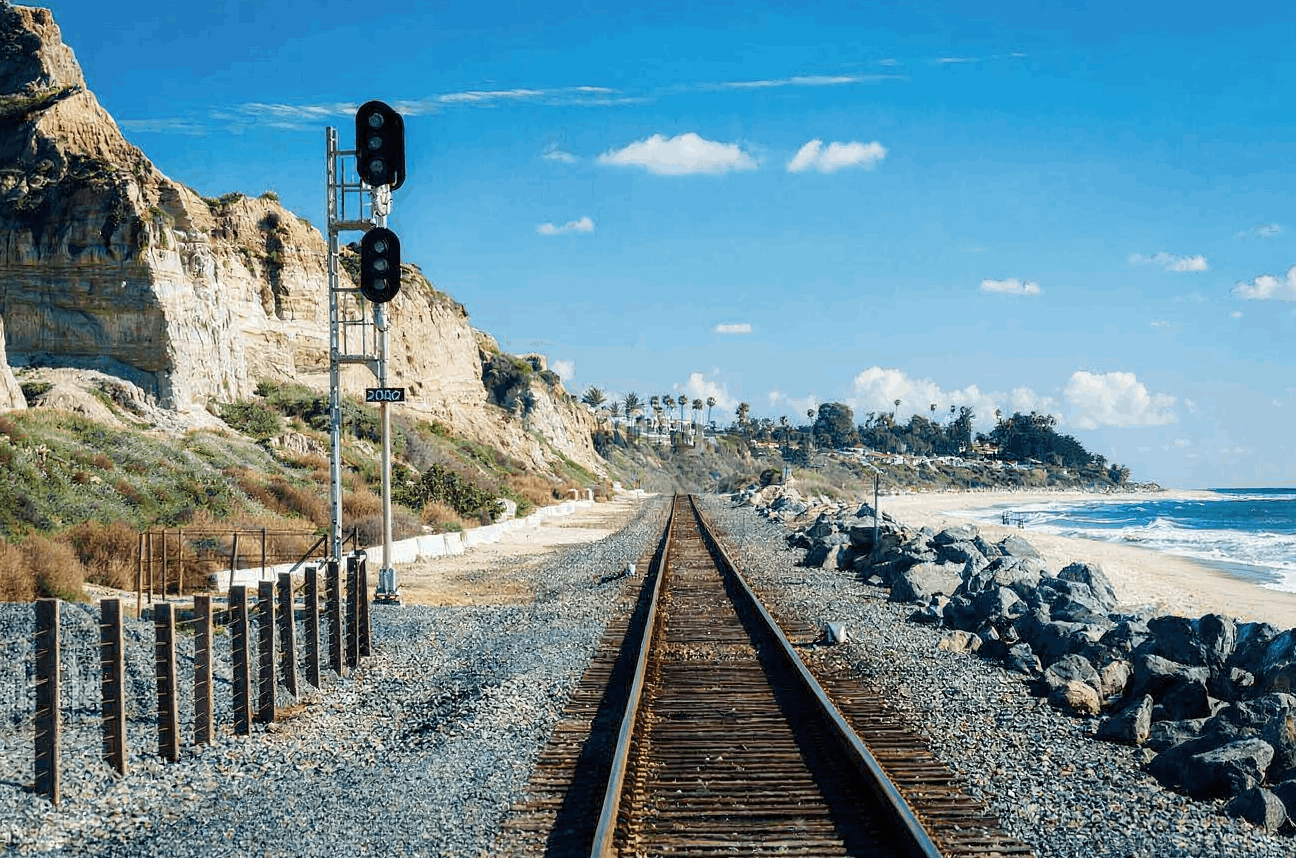
The most underappreciated part of the debate is what the tracks do for beach access. The rail line sits between the bluff neighborhoods and the sand, and running right alongside it is the San Clemente Beach Trail, a coastal path of roughly two and a third miles that connects North Beach in the north, past the pier in the middle, down to Calafia and San Clemente State Beach in the south. For residents within reach of it, that trail is one of the best everyday amenities in town, a flat, ocean-level walk, run, and stroll with the water on one side and the bluffs on the other.
Because the tracks lie between the neighborhoods and the water, reaching the sand means crossing them, and the trail has a series of designated pedestrian crossings built for exactly that, with safety enhancements added along the way. The same crossings that bring some horn noise are also what make the beach reachable on foot. It is worth knowing that the trail, like the rail corridor itself, has been affected by recent bluff failures, and a section has at times required a detour while repairs proceed. The trail is a real and beloved asset, and its current condition is a fair thing to confirm for any home that depends on it.
How location changes the verdict
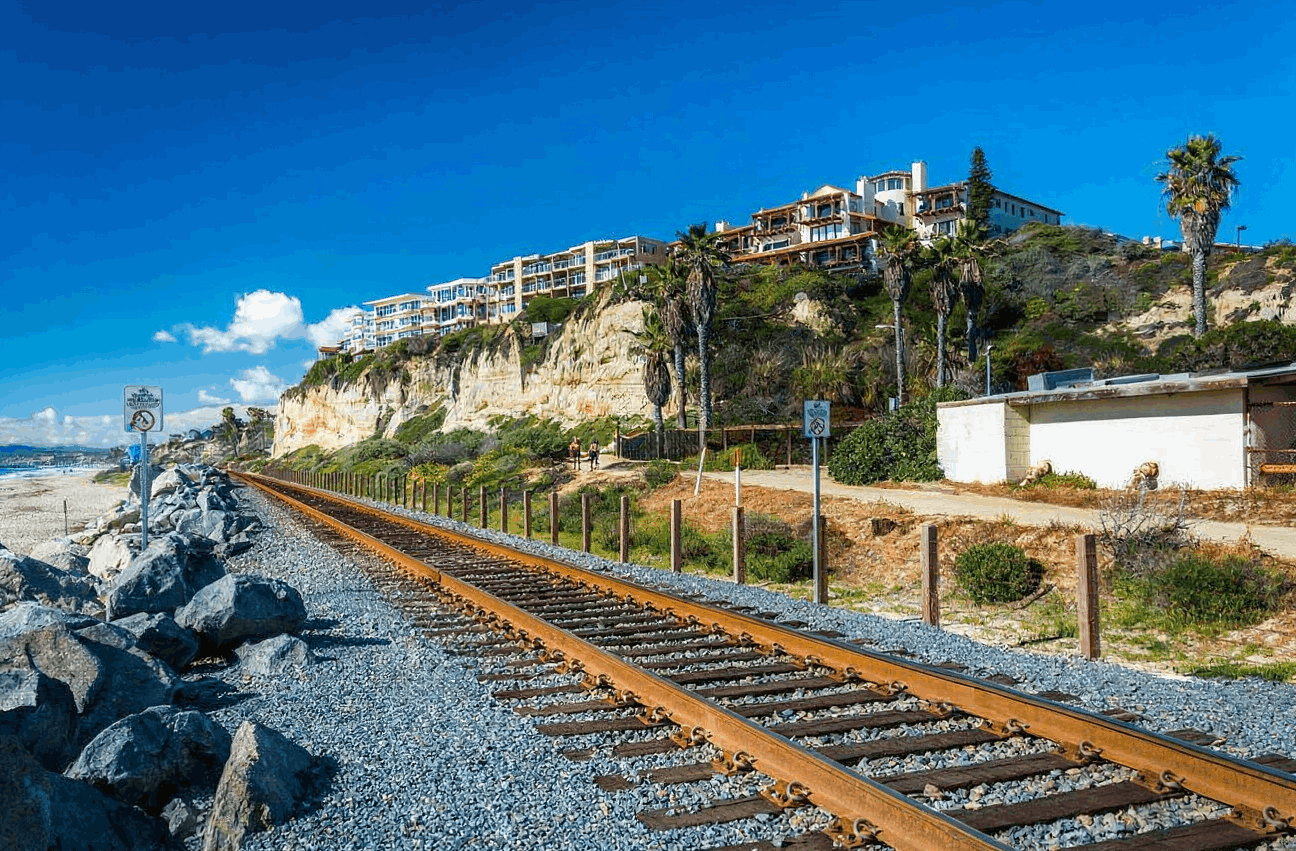
Everything about the San Clemente train comes back to location. A beachfront or low-bluff home near the pier or a pedestrian crossing lives closest to both sides of the trade-off, the most train presence and noise, and the most immediate access to the sand and the trail. A home set higher on the bluff or a few parcels back trades some of that immediacy for a quieter version of the line while still enjoying the coastal setting and, in many cases, the views the corridor helps preserve by keeping the shoreline open.
There is no universally correct spot on that spectrum. There is only the spot that fits how you actually live. The buyer who will ride the train and walk the trail daily may happily accept more of the line in exchange for being in the middle of it. The buyer who wants the coast as a quiet backdrop will be happier set back. The mistake is not choosing one over the other. The mistake is choosing without standing on the property long enough to know which one you are.
What to check before you decide
If a home sits near the line, a little fieldwork settles the question better than any opinion. Visit the property more than once and at different times of day, and try to be there as a train passes so you hear it for yourself rather than imagining it. Identify the nearest crossing and whether it is a vehicular crossing in the North Beach quiet zone or a pedestrian crossing along the beach trail, since that shapes the horn exposure. Note the distance and elevation between the home and the tracks. Confirm the current Metrolink schedule if the commute matters to you, and the current condition of the beach trail if access to it is part of the appeal. And review the seller disclosures for anything noted about the rail corridor. With those answers in hand, the verdict is yours rather than the internet's.
Quick Facts
| Category | Description |
|---|---|
| The corridor | An active coastal rail line along the San Clemente shore used by Metrolink and Amtrak Pacific Surfliner trains, plus occasional freight |
| Stations | San Clemente, known locally as North Beach, is the regular station. The San Clemente Pier station is open only on weekends |
| North Beach quiet zone | Vehicular crossings at North Beach have been a quiet zone since 2011, so trains do not routinely sound horns there |
| Pedestrian crossings | The beach trail crossings were not part of the vehicular quiet zone, and horn noise is more present near the pier and the trail |
| Conductor discretion | A conductor may always sound the horn or bell for safety, regardless of the quiet zone status |
| Beach trail | The San Clemente Beach Trail runs roughly two and a third miles from North Beach past the pier to San Clemente State Beach, with designated pedestrian crossings |
| The commute | A genuine coastal rail option from North Beach, but a modest number of trains a day and erosion-related closures make it a complement to a car |
| The deciding factor | Distance from the tracks and proximity to a crossing, which is why the verdict is property-specific |
Frequently Asked Questions
How loud is the train in San Clemente?
It depends on the home. The rolling sound of passing trains is part of the soundscape for anything near the tracks and fades with distance and elevation. Horn noise is the bigger variable, and it is local. The North Beach vehicular crossings have been a quiet zone since 2011, so horns are not routine there, while the pedestrian crossings along the beach trail, including near the pier, are noisier. Stand on the specific property as a train passes to judge it for yourself.
Can you commute by train from San Clemente?
Yes, from the North Beach station, using Metrolink up the coast and inland toward county job centers and beyond, with the Amtrak Pacific Surfliner on the same corridor. The San Clemente Pier station runs weekends only. The line carries a modest number of trains a day and has seen closures from coastal erosion, so for most households it works best as a complement to a car rather than a sole commute. Check the current schedule before relying on it.
Does the rail line block beach access in San Clemente?
The tracks sit between the neighborhoods and the sand, so reaching the beach means using one of the designated pedestrian crossings along the San Clemente Beach Trail. That trail, roughly two and a third miles from North Beach to the state beach, is a major amenity in its own right. Recent bluff failures have affected parts of the corridor and the trail, so confirm the current condition for any home that depends on it.
Do trains lower home values near the tracks in San Clemente?
Proximity to the line is one factor buyers weigh, and its effect is location-specific rather than uniform. Some buyers pay for the immediacy of the beach trail and the coastal commute, while others prefer to be set back for a quieter setting. Because the line is both a drawback and an amenity depending on the home and the buyer, its effect on value is best assessed property by property with a local agent rather than assumed.
A Final Word from Susan Chase
The San Clemente train is the rare feature that is genuinely a flaw for one buyer and a perk for the next, and the smartest thing you can do is figure out which one it is for you before you fall for a specific home. The line is real, the noise is local, the commute is useful but modest, and the beach trail it runs beside is one of the best things about living here. None of that is a verdict. It is a set of facts you can weigh for your own life.
If you are weighing a San Clemente home near the line and want an honest read on what the train would mean from that exact spot, reach out. I will walk the property with you, listen for a train, and help you tell the difference between a deal-breaker and a trade-off worth making. You can reach me at the contact below whenever you are ready to talk.
Living in Coastal OC is the editorial home of Susan Chase and the Susan Chase Group at Compass, serving buyers, sellers, and relocations across Laguna Beach, Dana Point, Laguna Niguel, San Clemente, and San Juan Capistrano. For private consultations, neighborhood tours, or relocation guidance, contact us at livingincoastaloc.com.

Susan Chase Group | Compass
Dana Point, California
949-370-6950
susan.chase@compass.com
livingincoastaloc.com
🙋🏼♀️ I’m Susan Chase, your South Orange County Realtor, advisor and guide, helping buyers, sellers, and relocations right-size and find a coastal home and lifestyle they’ll love. ❤️
Sources & Data Verification. The active coastal rail corridor along the San Clemente shore, used by Metrolink and Amtrak Pacific Surfliner service with occasional freight: Orange County Transportation Authority and Metrolink references. The two San Clemente Metrolink stations, the regular station listed as San Clemente and known locally as North Beach and the weekend-only San Clemente Pier station: Metrolink and OCTA station references. The North Beach vehicular crossing quiet zone established in 2011 as part of a countywide Orange County grade-crossing quiet zone program, the fact that the program applied to vehicular crossings rather than the pedestrian crossings along the beach trail, the history of efforts and resistance regarding a quiet zone at the pier pedestrian crossing, and the principle that a conductor may sound the horn or bell at their discretion for safety regardless of quiet zone status: San Clemente Times reporting, City of San Clemente references, and OCTA railroad crossing program references. The San Clemente Beach Trail of roughly two and a third miles from North Beach past the pier to San Clemente State Beach, the designated pedestrian railroad crossings and safety enhancements along it, and recent bluff failures affecting the corridor and trail with detours during repairs: Metrolink and OCTA beach trail and pedestrian crossing references, and City of San Clemente coastal rail project updates. The corridor's modest daily train frequency and its history of erosion-related closures: OCTA and Metrolink service references and City of San Clemente coastal rail emergency project updates. All descriptions of noise, schedules, trail condition, and value effects are directional and location-specific, not a determination for any particular property, and rail schedules, quiet zone status, trail condition, and corridor stability change over time. Confirm the current Metrolink schedule, the status of any quiet zone or crossing, the current condition of the beach trail, and a property-specific assessment with the relevant agencies and a licensed local agent before making a purchase decision.
Categories
- All Blogs (161)
- 2026 Harbor & Coast Reports (3)
- Coastal OC Lifestyle (17)
- Guides (17)
- Into the Weekend with Susan (1)
- Living in Dana Point (20)
- Living in Laguna Beach (20)
- Living in Laguna Niguel (19)
- Living in San Clemente (18)
- Living in San Juan Capistrano (17)
- Micro-Market Deep Dives (5)
- Relocation (3)
- Right Sizing Strategy (6)
- Strategic Market Intelligence (17)
Recent Posts







REVIEWS