
Understanding HOAs and Guard Gated Communities in Coastal OC

Guard-gated communities in coastal Orange County offer controlled access and shared amenities managed by a homeowners association, and buyers should weigh the dues, the rules, and the reserves against the privacy and services they provide.
A great many of the coast's most desirable homes sit inside an association or behind a gate, so understanding how these communities work is not optional for a serious buyer here; it is essential.
After more than thirty years guiding buyers through this market, I have seen how often an HOA or a gated community makes or breaks a purchase, usually because the buyer did not understand what they were signing up for until late in the process. There is nothing to fear here, but there is plenty to know. This guide demystifies how homeowners associations and guard-gated communities work in coastal Orange County, what your dues actually buy, what the rules govern, and what to review before you commit. Many of the gated enclaves I discuss appear in my guide to the best luxury gated communities in Laguna Niguel, which pairs well with this overview.
What follows is a plain-language breakdown of the difference between an HOA and a gate, what dues and assessments cover, the honest pros and cons, and the documents every buyer should read before making an offer.
Key takeaways
- A homeowners association manages shared areas, amenities, and rules, funded by regular dues from every owner.
- Gated and guard-gated are different, ranging from a simple coded gate to a staffed, around-the-clock entrance.
- Dues cover ongoing operations, while reserves fund future repairs, and special assessments can arise when reserves fall short.
- Mello-Roos is separate from HOA dues, appearing on the property tax bill in some newer communities.
- Reviewing the governing documents, budget, and reserves early is the single most important step before buying in one.

What is an HOA and what does it cover?

Homeowner association member talking to a new family in the community
A homeowners association is the organization that governs a community, maintaining shared spaces and enforcing rules, funded by dues paid by every owner.
When you buy in an HOA community, you become a member of an association that owns and maintains the shared elements of the neighborhood. Depending on the community, that can include private roads, landscaping, pools, tennis or pickleball courts, clubhouses, trails, gates, and in some cases private beach access. The association collects regular dues to pay for all of it, along with insurance for the common areas and the cost of managing the community. In exchange for those dues and a set of shared rules, you get a level of upkeep, amenity, and consistency that individual homeowners rarely achieve on their own. The trade is real on both sides, and understanding it is the foundation of everything else.
What is the difference between gated and guard-gated?

Guard-gated community entrace
The difference is staffing and access control, ranging from an open community to a coded gate to a staffed, around-the-clock guarded entrance.
Not all gates are equal, and the distinction matters for both lifestyle and cost. An open community has no gate at all. A gated community uses a coded or remote-controlled gate that residents and guests operate themselves. A guard-gated community adds staff at the entrance, sometimes during set hours and sometimes around the clock, which provides controlled access and a more managed entry. Guard gated communities, like several of Dana Point's coastal enclaves, typically carry higher dues to fund that staffing, and they appeal to buyers who value privacy and a controlled, well-managed entrance. My guide to living in Niguel Shores shows what a guard-gated coastal community looks like day-to-day, and my Monarch Beach and Monarch Bay guide covers others.
What do HOA dues and assessments include?

Women having a good time as they conduct a meet-up with fellow homeowners
Dues fund the community's day-to-day operations and reserves, while special assessments and Mello-Roos are separate charges that buyers should understand up front.
Regular dues cover the ongoing costs of running the community, from maintenance and amenities to management and common-area insurance, and a portion is meant to build reserves for future repairs like roofs, roads, or gates. When reserves are underfunded and a major repair comes due, the association may levy a special assessment, a one-time charge on top of dues, which is exactly why reserve health matters so much. Separately, some newer master-planned communities sit within a Mello-Roos district, which adds an assessment to the property tax bill to fund community infrastructure. Mello-Roos is not an HOA charge, but it affects your total monthly cost the same way, so it belongs in your calculations from the start.
What are the pros and cons of gated and HOA living?
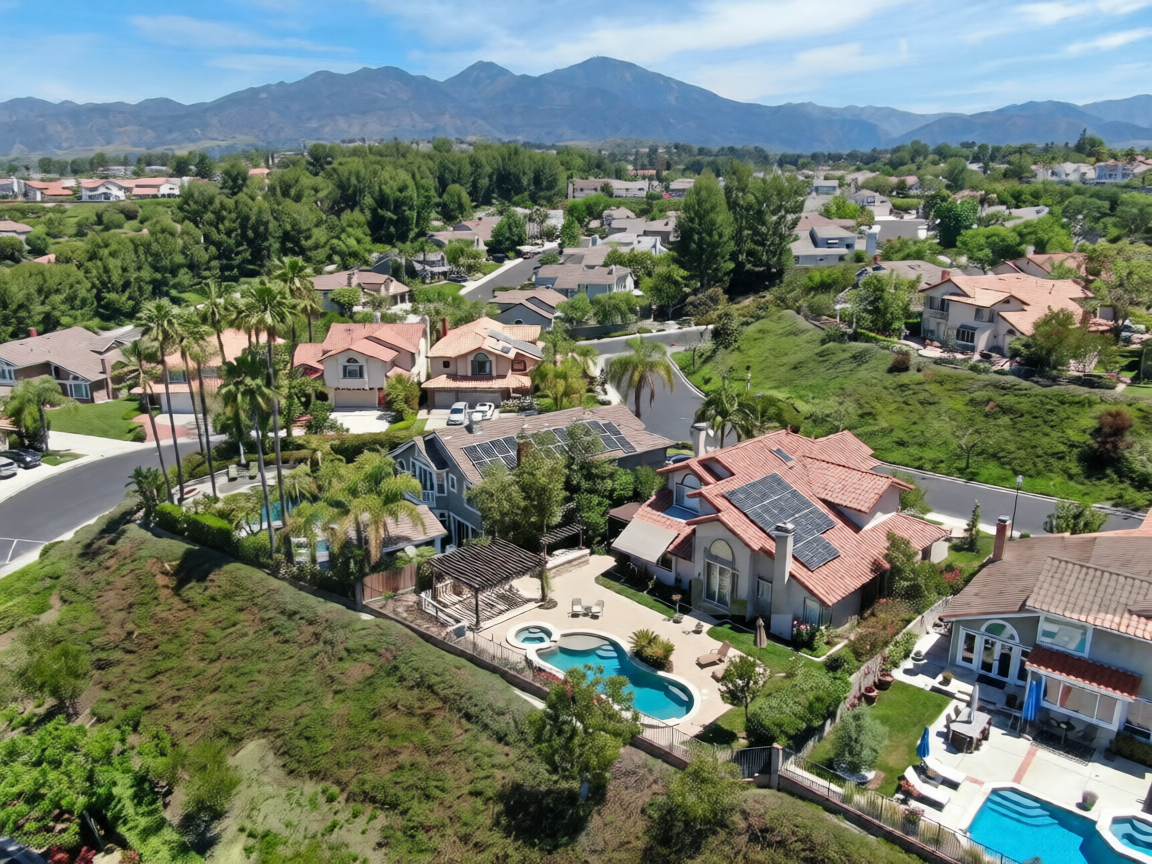
Executive Village with pool, solar panels, and spacious property
The pros are amenities, upkeep, privacy, and controlled access, while the cons are ongoing costs, shared rules, and the possibility of assessments.
On the plus side, HOA and gated communities deliver a level of consistency and amenities that is hard to match, from maintained landscaping and resort-style facilities to private roads and, in guard-gated communities, a managed entrance. For many buyers, especially second-home owners and those who value a lock-and-leave lifestyle, that upkeep is a genuine benefit. On the other side, you pay for it monthly, you agree to live by the community's rules on everything from exterior changes to parking, and some communities restrict rentals, which matters if you ever plan to lease the home. And there is always the possibility of a special assessment. None of this is a drawback if you go in informed, which is the entire point of doing your homework early.
What should buyers review before buying in an HOA?

Homes in Orange County. A closed or gated community with a view of the mountains.
Review the governing documents, the budget, the reserves, recent meeting minutes, and any rental or use restrictions before you make an offer.
This is where a careful buyer protects themselves. During your due diligence, you should receive and read the community's governing documents, often called the CC&Rs, which spell out the rules and restrictions. Review the current budget and the reserve study to gauge financial health, read recent meeting minutes for any hint of coming assessments or disputes, and confirm the rules on rentals and use if either matters to you. This is also the moment to confirm whether Mello-Roos applies. These documents tell the real story of a community, and reading them before you are emotionally committed is the smartest move a buyer can make. I always help my clients know what to look for, and I recommend confirming any legal or financial questions with the appropriate professional.
Which coastal OC communities are gated?
Coastal Orange County has a wide range of gated and guard-gated communities, concentrated in Dana Point, Laguna Niguel, and Laguna Beach.
Gated living is common along this coast. In Dana Point, guard-gated and gated coastal enclaves include Niguel Shores, Monarch Bay, Ritz Cove, and the Strand at Headlands. Laguna Niguel offers a deep selection of gated hillside communities, many with ocean and canyon views. Laguna Beach has private oceanfront enclaves such as Emerald Bay and Three Arch Bay, and San Clemente and San Juan Capistrano include gated pockets and communities of their own. The range means a buyer set on gated living has real choice across the region, from walk-to-sand enclaves to hillside view communities. My Laguna Niguel gated communities guide is a good next step for that search.
| Term | What it means |
|---|---|
| HOA | The association that manages shared areas and rules, funded by owner dues |
| CC&Rs | The governing documents that set the community's rules and restrictions |
| Dues | Regular payments that fund operations, amenities, and reserves |
| Reserves | Savings the association holds for future major repairs |
| Special assessment | A one-time charge when reserves fall short of a major cost |
| Mello-Roos | A separate assessment on the tax bill in some newer communities |
| Guard gated | A community with a staffed, access-controlled entrance |
Frequently asked questions
What do HOA dues cover in coastal Orange County?
Dues typically cover maintenance of shared areas, amenities like pools and clubhouses, common-area insurance, community management, and gates or staffing where applicable. A portion also funds reserves for future repairs. What is included varies widely by community, so review the budget for any specific home.
What is the difference between gated and guard gated?
A gated community uses a coded or remote gate that residents operate, while a guard gated community adds staff at the entrance, sometimes around the clock. Guard gated communities usually carry higher dues to fund the staffing and offer more controlled access.
What should I check before buying in an HOA?
Read the governing documents, the current budget, and the reserve study, review recent meeting minutes for signs of coming assessments, and confirm any rental or use restrictions and whether Mello-Roos applies. These documents reveal the true financial and lifestyle picture of a community.
Where to go next
- Explore gated options in my Laguna Niguel gated communities guide.
- See a guard gated coastal community up close in my Niguel Shores guide.
- Ready to buy? Read what it takes to buy a home in coastal South OC.

Final word from Susan Chase
An HOA or a gate is neither good nor bad on its own, it is simply a set of trade-offs to understand before you buy. My role is to help you read a community the way I would, weighing the dues and rules against the amenities and privacy, and making sure the documents hold no surprises. Do that homework early and gated living can be one of the most rewarding ways to live on this coast.

Susan Chase Group | Compass
Dana Point, California
949-370-6950
susan.chase@compass.com
livingincoastaloc.com
🙋🏼♀️ I’m Susan Chase, your South Orange County Realtor, advisor and guide, helping buyers, sellers, and relocations right-size and find a coastal home and lifestyle they’ll love. ❤️
Editorial note. This guide is written from more than thirty years of guiding buyers through communities in coastal South Orange County. It is intended as general education, not as an inducement toward or away from any community, and all observations here relate to community governance, cost, and housing.
Sources and disclosure. HOA structures, dues, reserves, Mello-Roos, and community rules vary widely by community and change over time, so confirm the specifics for any property before you rely on them. I am a licensed real estate advisor, not a legal, financial, or tax professional. Treat the information here as general orientation and review the governing documents and confirm current details for your own situation before acting.
Categories
- All Blogs (153)
- 2026 Harbor & Coast Reports (2)
- Coastal OC Lifestyle (15)
- Guides (11)
- Into the Weekend with Susan (1)
- Living in Dana Point (20)
- Living in Laguna Beach (20)
- Living in Laguna Niguel (19)
- Living in San Clemente (18)
- Living in San Juan Capistrano (17)
- Micro-Market Deep Dives (5)
- Relocation (3)
- Right Sizing Strategy (6)
- Strategic Market Intelligence (17)
Recent Posts






REVIEWS