
Why Lot Size Matters More in San Juan Capistrano Than Anywhere Else in South OC
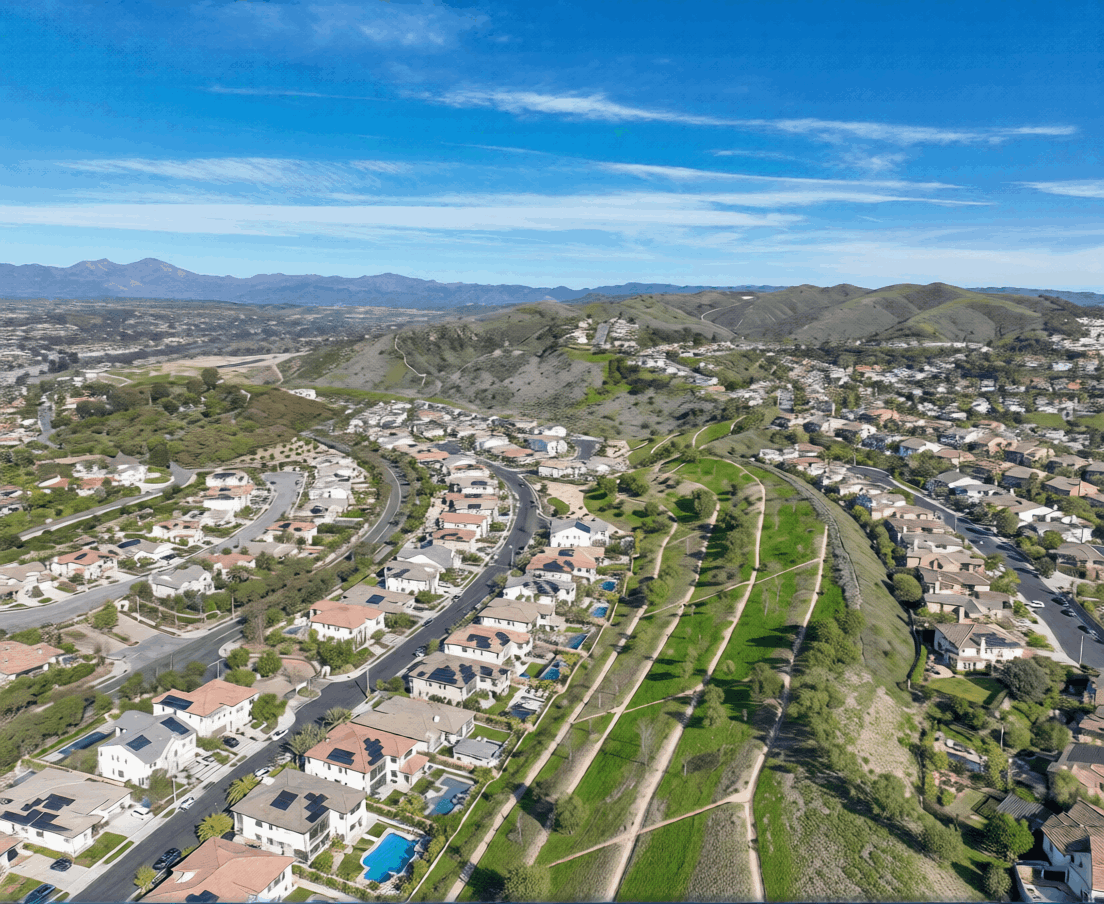
rive ten minutes through San Juan Capistrano and you can pass a comfortable home on a standard lot, then a house of almost identical size sitting on two acres with horse facilities and a view corridor. On paper, the homes look like cousins. In price, they are not in the same conversation.
That gap is the most important thing to understand about this market. San Juan Capistrano has the widest pricing spread of any city in coastal South Orange County, wider than Dana Point, wider than San Clemente, wider than the Laguna communities. And the single biggest reason is not the house. It is the land underneath it.
This is a study of how that works. Why price per square foot, the number most buyers anchor to, quietly stops meaning much as parcels grow. Why a half-acre and a two-acre lot can be separated by millions even when the homes are similar. And why, in San Juan Capistrano specifically, reading the lot matters more than reading the floor plan.
| Stat | Detail |
|---|---|
| ~$800K–$9M+ | Approximate span of for-sale home prices across the city |
| ~$1.4M | Recent median sale price range for San Juan Capistrano |
| ~43 days | Typical time on market, faster than the national average |
The Widest Pricing Spread in Coastal South OC
Most coastal South OC cities have a recognizable price band. Homes cluster around a range, with a visible high end and low end, but not an enormous distance between them. San Juan Capistrano breaks that pattern.
Public listing data puts the city's for-sale homes roughly between the low $800,000s for something small and vintage and well past $9 million for a hilltop estate, with a median that has been sitting near $1.4 million. That is an unusually long runway. A small historic-area cottage and a guard-gated equestrian estate are technically in the same city, the same MLS, sometimes the same ZIP, and they are priced worlds apart.
The reason is structural. San Juan Capistrano was built with larger parcels and lower density than its coastal neighbors, and it kept a layer of zoning that those neighbors mostly do not have: equestrian zoning, agricultural carve-outs, and rural-residential pockets sitting right alongside standard subdivisions. When a single city contains that much land-use variety, wide price variance is the natural result.
Why Price Per Square Foot Flattens as Lots Grow
Here is the mechanic that trips up almost every buyer who comes in from a denser market.
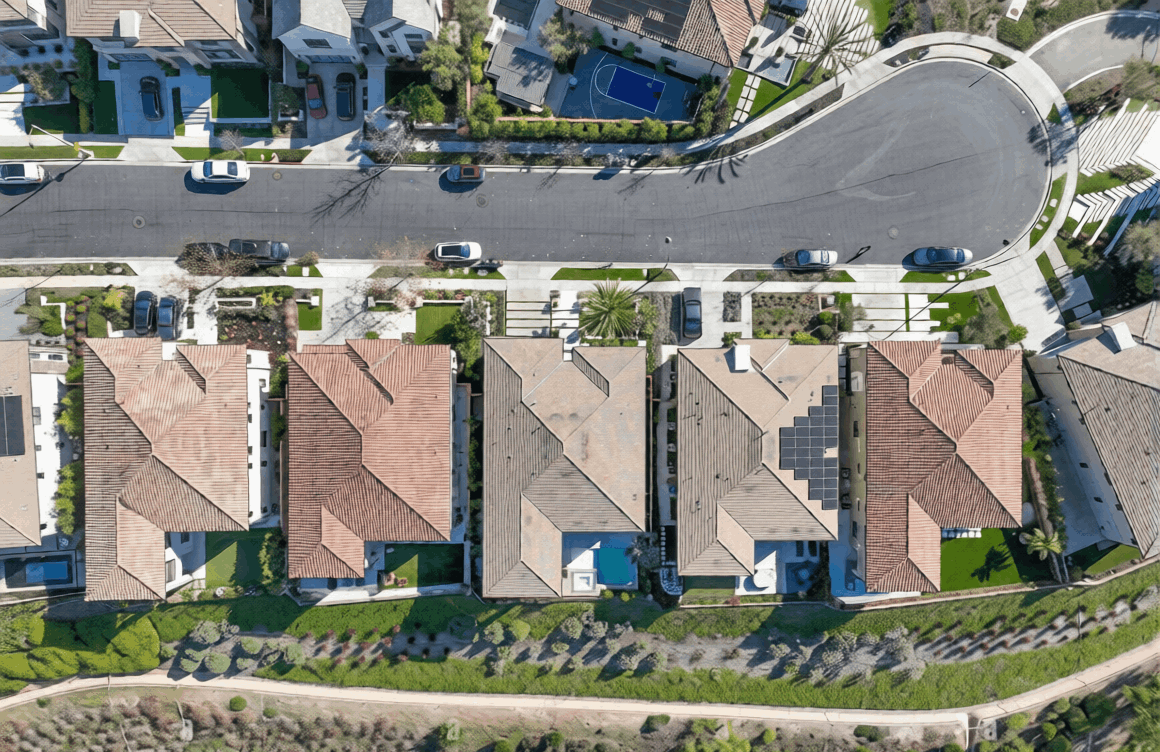
Price per square foot works as a comparison tool when the thing you are comparing is mostly the house. In a neighborhood of similar lots, the home is the variable, so dividing price by square footage gives you a roughly fair yardstick. Buyers from Irvine, from coastal condos, from tract neighborhoods are trained on this number, and in those settings it earns its keep.
It breaks down the moment land becomes the variable. A house is, in market terms, a replicable and depreciating asset. You can build another one. Land with specific zoning and a specific view is not replicable, and it does not depreciate. As a parcel grows, more and more of the price is the land, and land does not scale in a straight line. So price per square foot flattens out, and then it stops meaning much. On a three-acre equestrian parcel, dividing the sale price by the home's finished square footage produces a number that looks alarming or absurd, because you are measuring the wrong asset.
What Actually Drives a Large Lot's Value
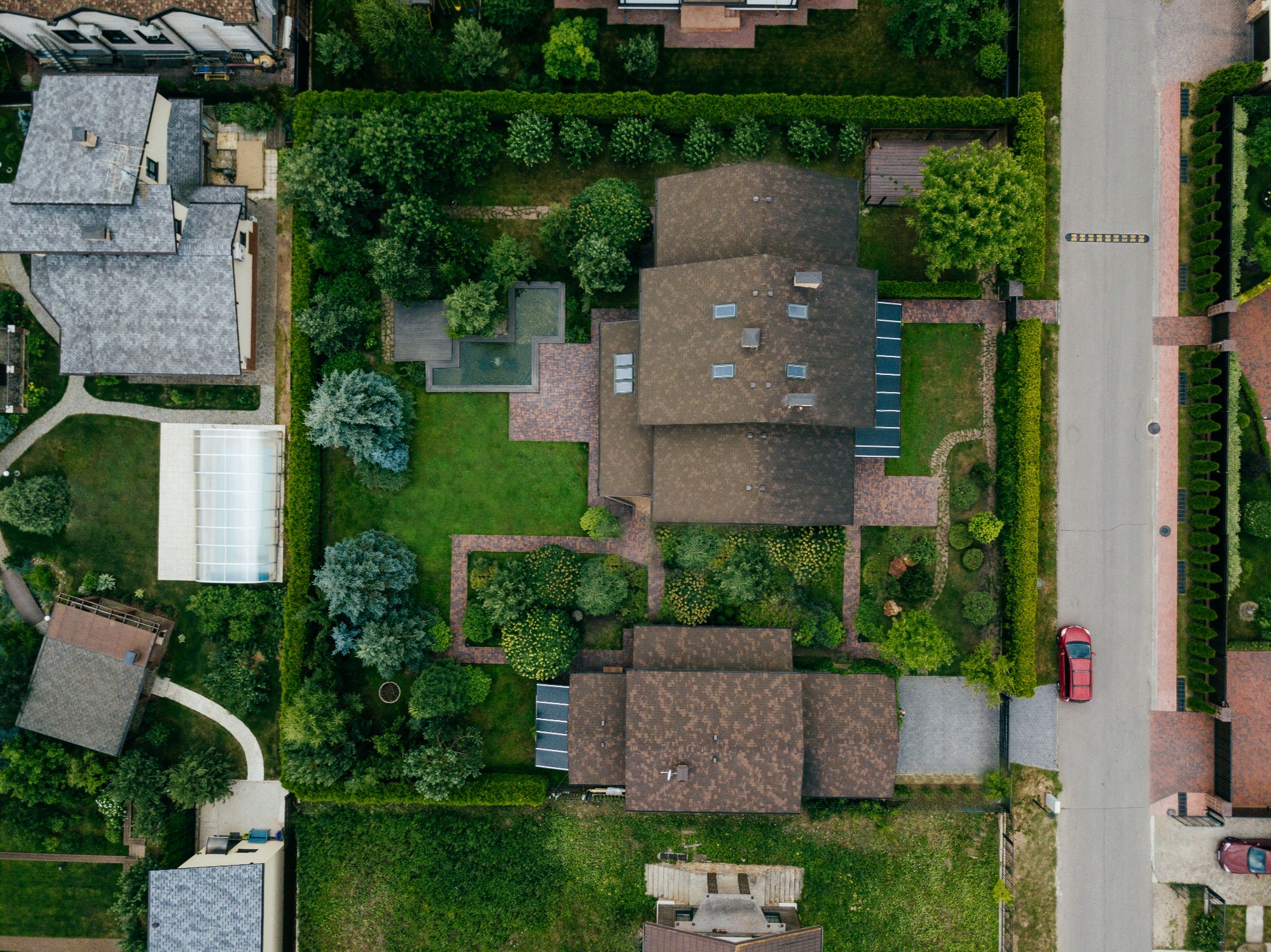
If square footage is not carrying the price on a large San Juan Capistrano lot, what is? Usually four or five things, in combination.
| Element | Detail |
|---|---|
| 🐎 Equestrian Zoning | The right to keep horses, build stables, and access trail systems is a genuine, transferable value. It is rare this close to the coast, and the buyers who want it will pay for it. |
| 🌳 Agricultural Carve-Outs | Pockets of the city carry grove history and agricultural zoning. Orchards, growing rights, and ag-friendly land use add value that has nothing to do with the residence. |
| 🌅 View Corridors | A protected view, often backed by HOA or city open-space designation, is permanent in a way a house is not. Unobstructed sight lines are priced as an asset. |
| 🏡 Usable Land and Privacy | Flat, buildable acreage, room for a guest house, a pool, a barn, a long private drive, is worth far more than the same square footage of unusable hillside. |
| 📐 Subdivision and Entitlement Potential | Some larger parcels carry the theoretical ability to subdivide under current zoning. Even unrealized, that optionality is part of the price. |
The Half-Acre vs. Two-Acre Question
This is the question that makes the whole study concrete. Picture two San Juan Capistrano homes of similar size, similar age, and similar finish level. One sits on a half-acre lot in a standard residential neighborhood. The other sits on two acres with equestrian zoning and a view.
A buyer anchored to price per square foot expects the two homes to land close together, with a modest bump for the bigger yard. That is not what happens. The two-acre property can command a premium measured in the millions, and the premium is not really for the extra dirt. It is for what the extra dirt unlocks: the horses, the privacy, the protected view, the sheer scarcity of usable acreage near the coast.
The half-acre home is priced largely as a house. The two-acre home is priced as land with a house on it. Those are two different products, and the market treats them that way.
| Lot Tier | What Mostly Carries the Price | How Price Per Square Foot Behaves |
|---|---|---|
| Standard lot (roughly a quarter acre or less) | The home itself: finishes, size, condition | Highest and most reliable; comps with neighbors hold up |
| Half-acre to one acre | The home, plus real weight from privacy and usable yard | Begins to spread; neighborhood comps get looser |
| One to three-plus acres | Land, zoning rights, views, and use potential | Flattens out and loses meaning as a comparison tool |
| Equestrian or agricultural acreage | Use rights and entitlements far more than square footage | Nearly useless; value lives in what the land allows |
Where the Big Lots Are
San Juan Capistrano's large-lot inventory is not spread evenly. It concentrates on a set of recognizable areas.
The Hunt Club is the headline. A guard-gated equestrian community off Ortega Highway, it is one of the city's most expensive enclaves, with estate homes on multi-acre parcels and direct trail access. Mission Hills Ranch is a gated equestrian community built around private stables and riding facilities. Los Corrales is known for large lots and proximity to equestrian amenities, with a quieter, semi-rural feel. Peppertree Bend and Hidden Mountain offer custom homes on expansive, private parcels in the hills. And the older Mission-area and rural pockets hold some of the most distinctive land in the city, where parcel size and history both drive value.
Each of these areas prices differently, and within each one, the lot is still the swing factor. Two homes in the same equestrian neighborhood can diverge sharply based on acreage, usable land, and view.
What This Means If You're Buying or Selling 🔑

Whether you are buying or selling in San Juan Capistrano, the takeaway is the same. Lead with the land.
If You're Buying
- Do not anchor to price per square foot. On anything above a standard lot, that number will mislead you. Ask what the land does, not just what the house measures.
- Confirm the zoning. Equestrian, agricultural, and rural-residential designations are real value. Verify what a specific parcel actually allows.
- Separate usable from total acreage. Two acres of flat, buildable land is a very different asset than two acres of slope.
- Check what protects the view. A view backed by open-space designation is durable. A view backed by nothing is borrowed.
- Price the optionality. Subdivision potential, room to add structures, and trail access all carry value even if you never use them.
For sellers, the job is the mirror image. If you are selling acreage, your task is to make the land legible. Buyers cannot pay for equestrian rights, usable flat land, or a protected view if the listing never makes those things clear. The home gets the photos. The land gets the price.
Frequently Asked Questions
Quick Facts
| Fact | Detail |
|---|---|
| ~$800K–$9M+ | Approximate span of San Juan Capistrano for-sale home prices |
| ~$1.4M | Recent median sale price range for the city |
| ~43 days | Typical time on market, faster than the national average |
| Equestrian zoning | A defining, value-adding land use that is rare this close to the coast |
| The Hunt Club | Guard-gated equestrian enclave; among the city's priciest, on multi-acre lots |
In This Market, Read the Land First
San Juan Capistrano rewards buyers and sellers who understand that the lot, not the floor plan, sets the price. If you are weighing a property here, or trying to position one for sale, let's look at the land together and build a strategy around what it actually delivers.

Susan Chase Group | Compass
Dana Point, California
949-370-6950
susan.chase@compass.com
livingincoastaloc.com
🙋🏼♀️ I’m Susan Chase, your South Orange County Realtor, advisor and guide, helping buyers, sellers, and relocations right-size and find a coastal home and lifestyle they’ll love. ❤️
Categories
- All Blogs (158)
- 2026 Harbor & Coast Reports (3)
- Coastal OC Lifestyle (16)
- Guides (15)
- Into the Weekend with Susan (1)
- Living in Dana Point (20)
- Living in Laguna Beach (20)
- Living in Laguna Niguel (19)
- Living in San Clemente (18)
- Living in San Juan Capistrano (17)
- Micro-Market Deep Dives (5)
- Relocation (3)
- Right Sizing Strategy (6)
- Strategic Market Intelligence (17)
Recent Posts





REVIEWS