
Dana Point Weather: Year-Round Climate Guide for Coastal Living
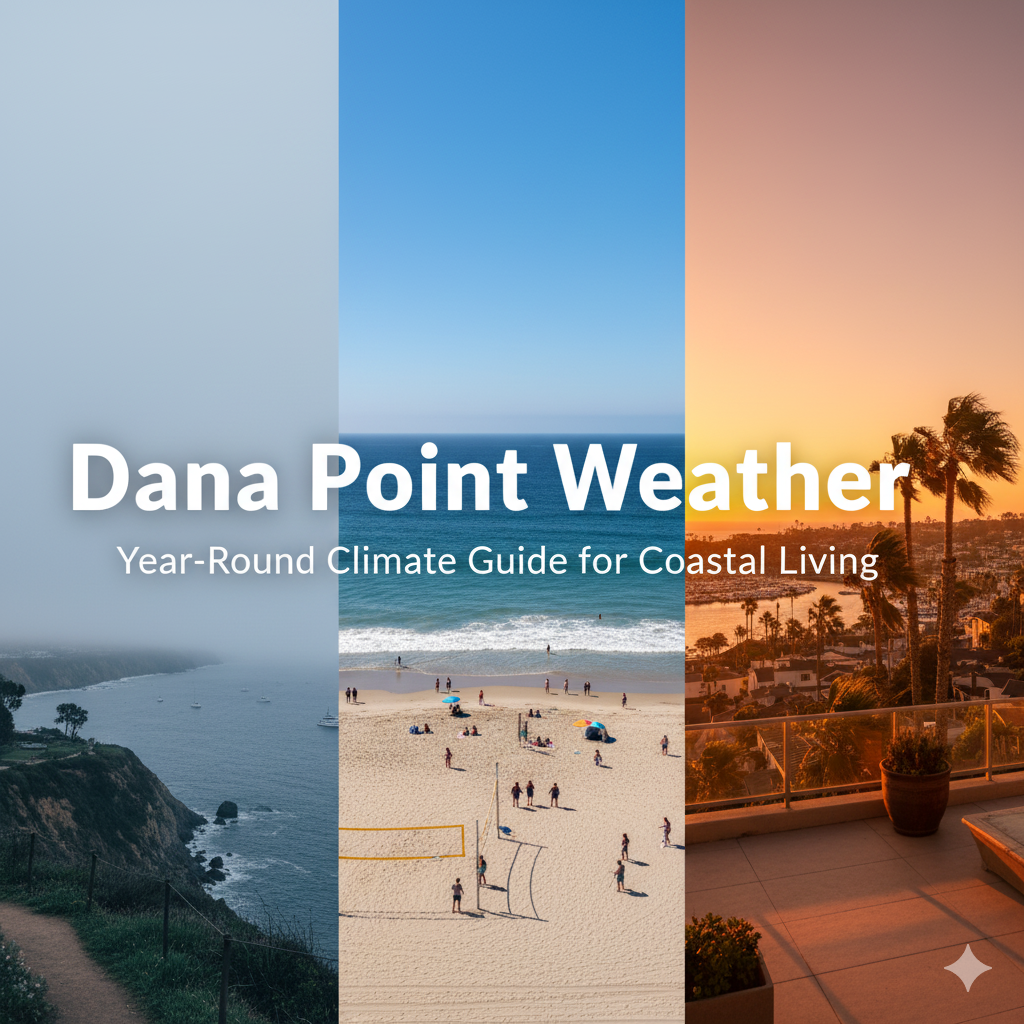
Dana Point experiences a Mediterranean climate with average temperatures from mid-60s in winter to mid-70s in summer, ~12 inches of annual rainfall, and steady ocean breezes. Microclimates bring May–July marine layer, ocean temps from 57–70°F, and occasional Santa Ana winds in fall and winter.
Understanding Dana Point's Mediterranean Coastal Climate
Classic Southern California coastal conditions—mild year-round temperatures, low precipitation, and strong marine influence—set Dana Point apart from inland areas just a few miles away. The exceptional weather is one of the key advantages of living in Dana Point and a major factor for those considering a move to the area.
Average Temperature Ranges Throughout the Year
| Month | Average High | Average Low | Ocean Temperature |
|---|---|---|---|
| January–February | ~65°F | ~48°F | 57–59°F |
| March–May | 68–72°F | 52–58°F | 59–63°F |
| June–August | 75–78°F | 62–65°F | 65–70°F |
| September–November | 76–70°F | 62–55°F | 68–63°F |
| December | ~65°F | ~48°F | ~60°F |
Marine Layer Phenomenon: May Gray and June Gloom Explained
Timing & Patterns
The marine layer typically strengthens late May through early July, arriving after midnight and clearing by late morning or early afternoon. Strong events can linger into mid-afternoon. Cooler land over warmer ocean encourages condensation and low clouds/fog.
La Niña years can intensify marine layer due to colder upwelling; inland neighborhoods 1–2 miles from the coast see less penetration.
Daily Impact
- Morning: overcast, low-60s, higher humidity.
- Midday/Afternoon: clearing to sun and warmer temps; plan beach time later in the day.
Understanding these patterns is particularly important for boating and harbor activities, where visibility can be affected during morning hours.
Dana Point Microclimate Variations by Neighborhood
Coastal & Harbor Areas (Lantern District)
- Often 5–10°F cooler than hillsides
- Max marine layer exposure; steady ocean breeze
- Higher humidity; minimal daily temperature swings
Headlands & Coastal Bluffs
- Coolest daytime temps
- Strongest wind exposure May–July
- Longest marine layer duration
Monarch Beach & Hillside Communities
- Warmer afternoons; less marine layer penetration
- More Santa Ana exposure; lower humidity
- Expansive sunset views; greater diurnal range
Near I-5 / Inland Edge
- Summer afternoons 10–15°F warmer than beachfront
- Reduced fog; quicker morning clearing
These microclimate differences are crucial factors when selecting among Dana Point's best neighborhoods. Coastal areas offer consistent breezes and cooler summers, while hillside communities provide more sun and warmth.
Pacific Ocean Water Temperature Patterns
Seasonal Ranges
- Winter–Spring (Jan–May): 57–63°F — full wetsuits common.
- Summer (Jun–Aug): mid-60s to ~70°F — most can swim without wetsuits.
- Fall (Sep–Nov): 68–63°F — warmest in September; gradual cool-down by November.
Casual no-wetsuit swimming is most comfortable July–September; surfers and divers use thermal gear most of the year.
Seasonal Weather Characteristics in Dana Point
Winter (Dec–Feb)
Periodic Pacific storms deliver 1–2 inches every few weeks amid long sunny stretches. Highs mid-60s; lows high-40s. Post-rain vistas and green hillsides make for excellent hiking.
Spring (Mar–May)
Transition from rain to marine layer. Increasing foggy mornings—especially May—with highs rising to low-70s. Wildflowers pop after wet winters.
Summer (Jun–Aug)
June sees the most overcast mornings; July–August bring consistent sun, mid-70s to low-80s afternoons, and cooling breezes. Peak tourism and beach season.
Fall (Sep–Nov)
Locals’ favorite: warm, clear, minimal fog, peak ocean temps, and lighter crowds after Labor Day. November cools to low-70s with occasional early storms. This is often considered the best time to list your Dana Point home given the ideal weather conditions for showings.
Santa Ana Wind Events
High pressure over the Great Basin can push hot, dry air to the coast October–February.
- Temperature: Mid-80s to low-90s spikes possible.
- Humidity: Single digits; very dry air.
- Winds: Offshore; 20–40+ mph in exposed areas; glassy ocean surface.
- Fire Weather: Elevated wildfire risk during events.
- Duration: Typically 2–4 days before onshore flow returns.
Essential Weather Considerations for Dana Point Living
Rarely Needed
- Snow gear or heavy coats
- Frequent umbrella use (except mid-winter)
- Continuous A/C (breezes + ventilation often suffice)
Good to Have
- Layers/light jackets for mornings & evenings
- Broad-spectrum sunscreen, sunglasses, sun hats
- Wetsuits/thermal swim gear Oct–May for long sessions
The minimal need for heating and cooling systems contributes to the relatively manageable cost of living in Dana Point compared to other premium coastal markets.
Climate Advantages for Real Estate Investment
Mild weather supports year-round outdoor living, low heating/cooling needs, and reduced weather-related maintenance. Homes oriented to capture ocean breezes and sunset views command premiums for comfort and energy efficiency.
The consistent climate is particularly attractive for retirees relocating to Dana Point and those downsizing from larger properties. The year-round outdoor lifestyle also enhances vacation rental appeal and ROI for investment properties.
For buyers purchasing from out of state, the reliable Mediterranean climate often ranks as a top decision factor when comparing Dana Point to nearby coastal communities.
Frequently Asked Questions About Dana Point Weather
- What is the best time of year to visit Dana Point?
- September–October: warm ocean temps, clear skies, minimal fog, and lighter crowds. Late spring and early fall are solid alternatives.
- How cold does Dana Point get in winter?
- Daytime highs sit in the mid-60s; nights dip into the high-40s. Rain comes in brief systems with long sunny breaks between. The mild winters are one of the primary reasons many choose to relocate to Dana Point.
- Does Dana Point have air quality issues?
- Most of the year air quality is excellent thanks to onshore breezes. Santa Ana events can temporarily lower air quality due to inland wildfire smoke. Morning marine layers may briefly trap pollutants until clearing.
- How does Dana Point's weather compare to other coastal cities?
- Dana Point enjoys similar Mediterranean conditions to neighboring communities but with slightly more protection from westerly winds due to the harbor's geography. See our detailed comparison with Laguna Beach for more climate insights.
Categories
Recent Posts





REVIEWS