
River Street and the Quiet Reinvention of Downtown San Juan Capistrano
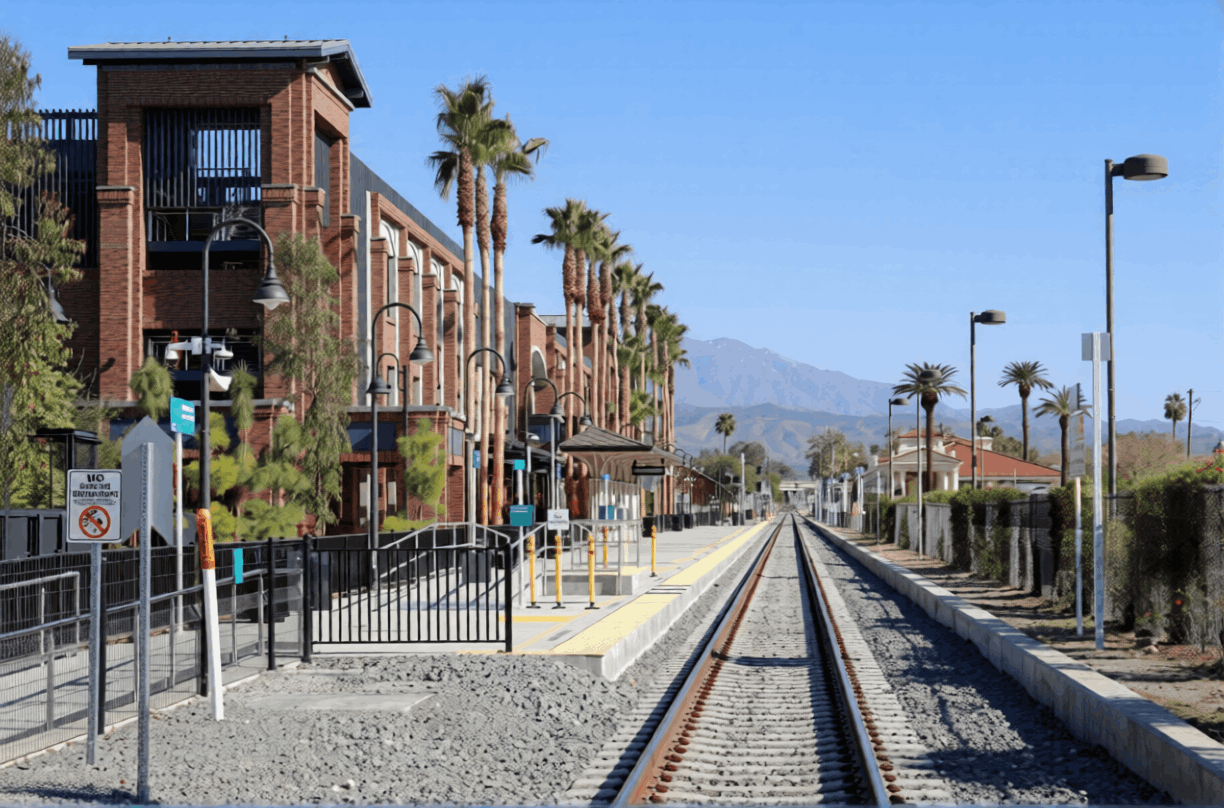
Walk out of the Capistrano Depot on a Saturday morning, cross the tracks, and the air does something you do not feel in most Orange County downtowns. It smells like wood smoke from a brick patio. A pastry case glows behind a window at Hidden House. A family on bikes coasts down Los Rios Street past the oldest occupied homes in California. A few hundred steps west, a sixty-thousand-square-foot agrarian marketplace is filling up with people who came for breakfast and stayed for the afternoon. Downtown San Juan Capistrano has not been rebuilt. It has been quietly reawakened. And the homes around it are starting to feel the gravity.
A Village That Was Already Here
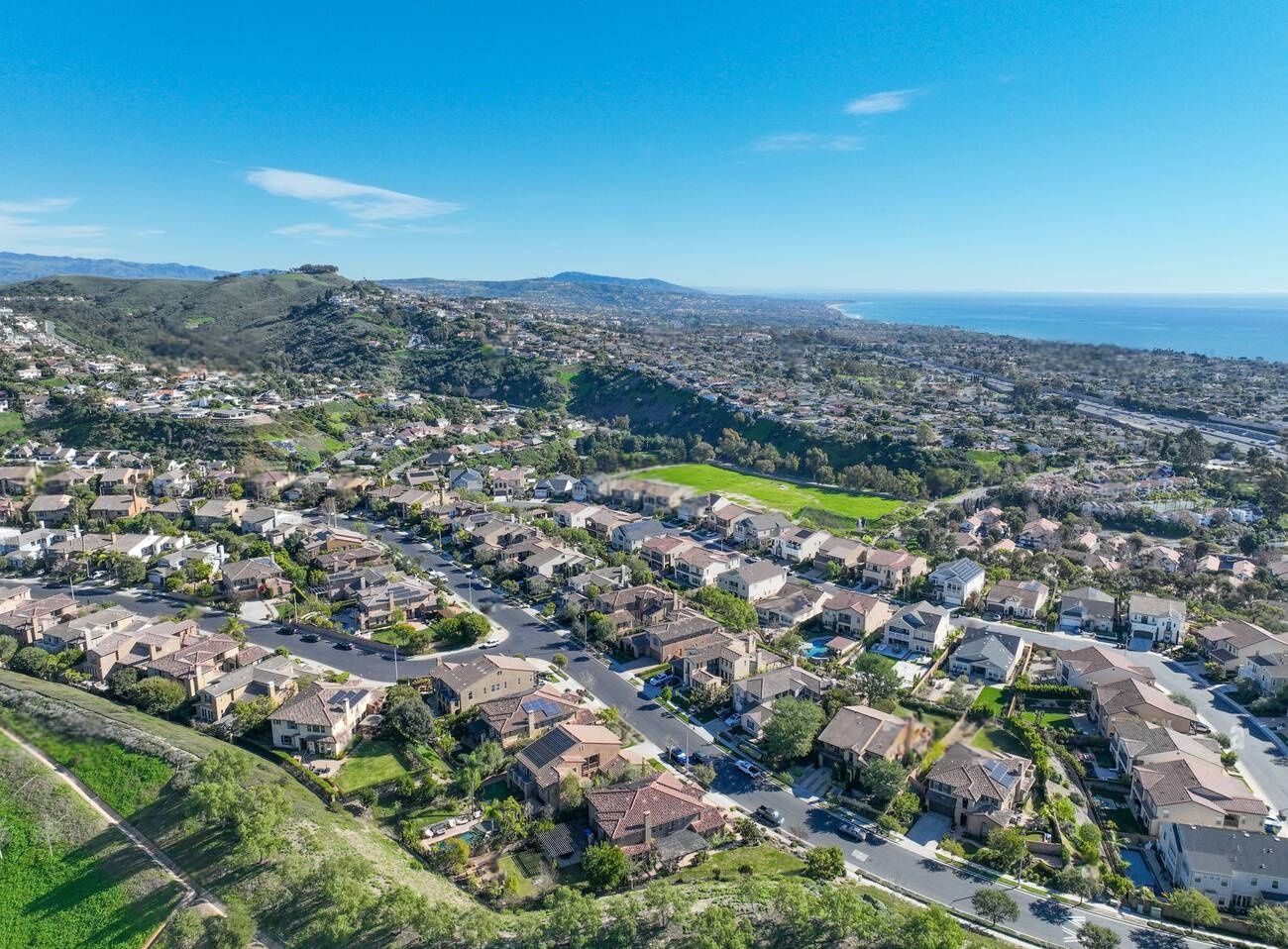
San Juan Capistrano has always had an unfair advantage in coastal South Orange County. The Mission, the swallows, the adobes on Los Rios Street, the 1894 Capistrano Depot with its domed Mission Revival tower. The bones of a true California village were never missing. What was missing, for a long time, was the everyday energy that turns a historic downtown into a place you actually want to live close to. You came for a wedding, a quiet anniversary dinner, the Mission tour. You left.
That has shifted in the last two years, and the shift has been more interesting than a single ribbon cutting. There is no one new restaurant rewriting the town. There is a layered, almost neighborhood-paced reinvention happening, anchored by River Street Marketplace but spreading well beyond it. For the people who already love this part of the world, it is the most quietly exciting thing that has happened to downtown San Juan Capistrano in a generation.
River Street Marketplace and the Tipping Point
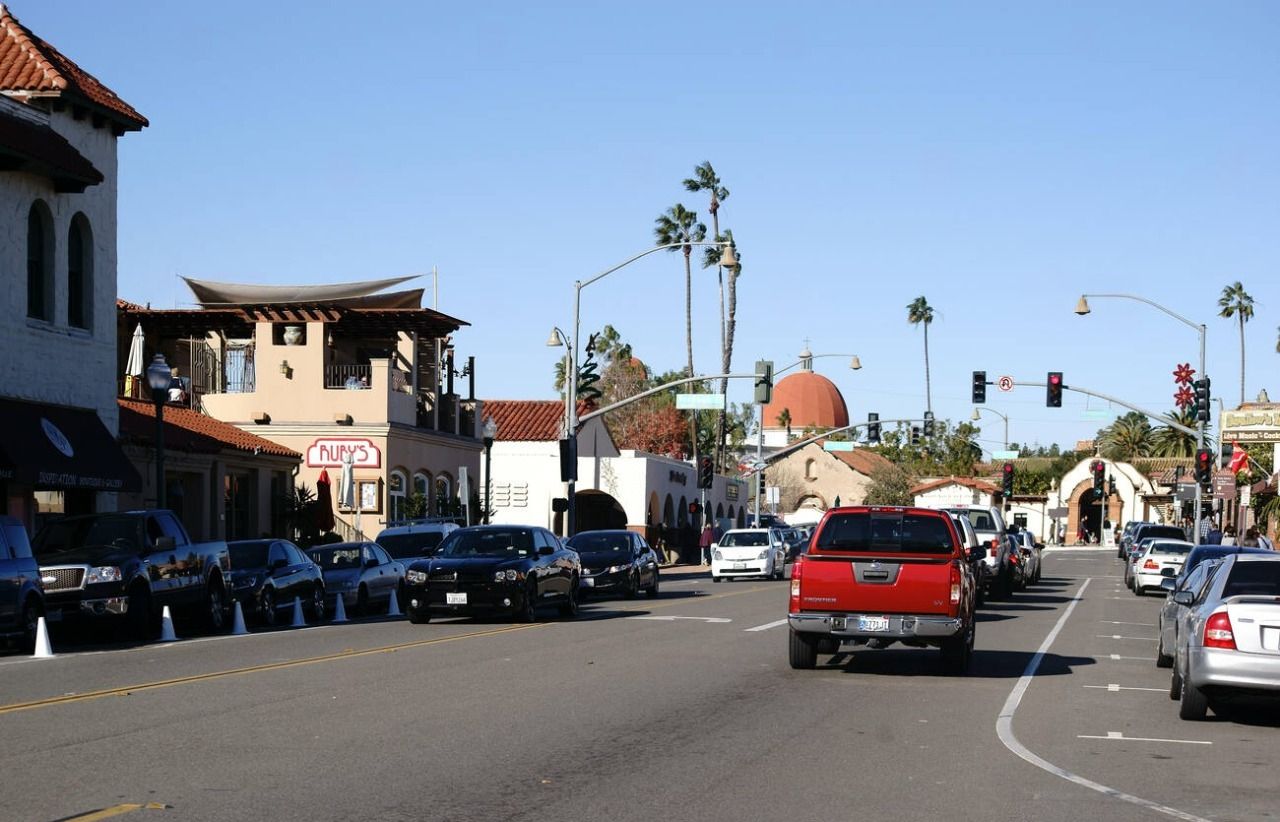
Opened in late 2024 by developer Dan Almquist and his firm ALMQUIST, River Street Marketplace sits on the Los Rios side of the tracks, on land that for decades belonged to Ito Nursery. Sixty thousand square feet, broken into a handful of barn-scaled buildings around a central green, with elevated agrarian architecture that nods to the farming heritage of the valley rather than imitating the Mission. There is no parking podium, no anchor box. It reads as a small district rather than a shopping center, which is the entire point.
The tenant mix has been chosen, not assembled. La Vaquera, the flagship from Acme Hospitality, runs a wood-fired ranchero menu with an indoor-outdoor bar and fire pits on the patio. Chef David Pratt brought Finca, a wood-fired California concept with quiet design notes from early-period Mexico. Capo Leisure House, run by Capistrano Brewing Co., pours craft beer and an all-California wine list. Rodeo House anchors the family-table side. Hobie Surf Shop took a 5,000-square-foot space at the south end, its first move into San Juan Capistrano. There is a butcher, a Studio Pilates, a Ubuntu Café from Long Beach, a Seager outpost from up the coast in San Clemente. Almquist was specific about no overlapping concepts. You feel that walking it.
What it has done, almost more than the businesses themselves, is give downtown San Juan Capistrano a continuous indoor-outdoor public room. People come down for breakfast and end up there at sunset. The marketplace borrows the depot's foot traffic, the depot borrows its energy. The Los Rios District, which has always been beautiful, suddenly has something to walk to and from.
Hidden House and the Los Rios Side of the Tracks
Cross from the depot platform to the Los Rios District and the scale changes immediately. Hidden House Coffee, tucked into a small wooden building at 31791 Los Rios Street, has been roasting lighter-than-average single origins for the better part of a decade and a half. The patio is shaded, the regulars are loyal, and the place has the kind of relaxed neighborhood-cafe quality that most Orange County coffee shops try to manufacture. It is the unofficial living room of the district.
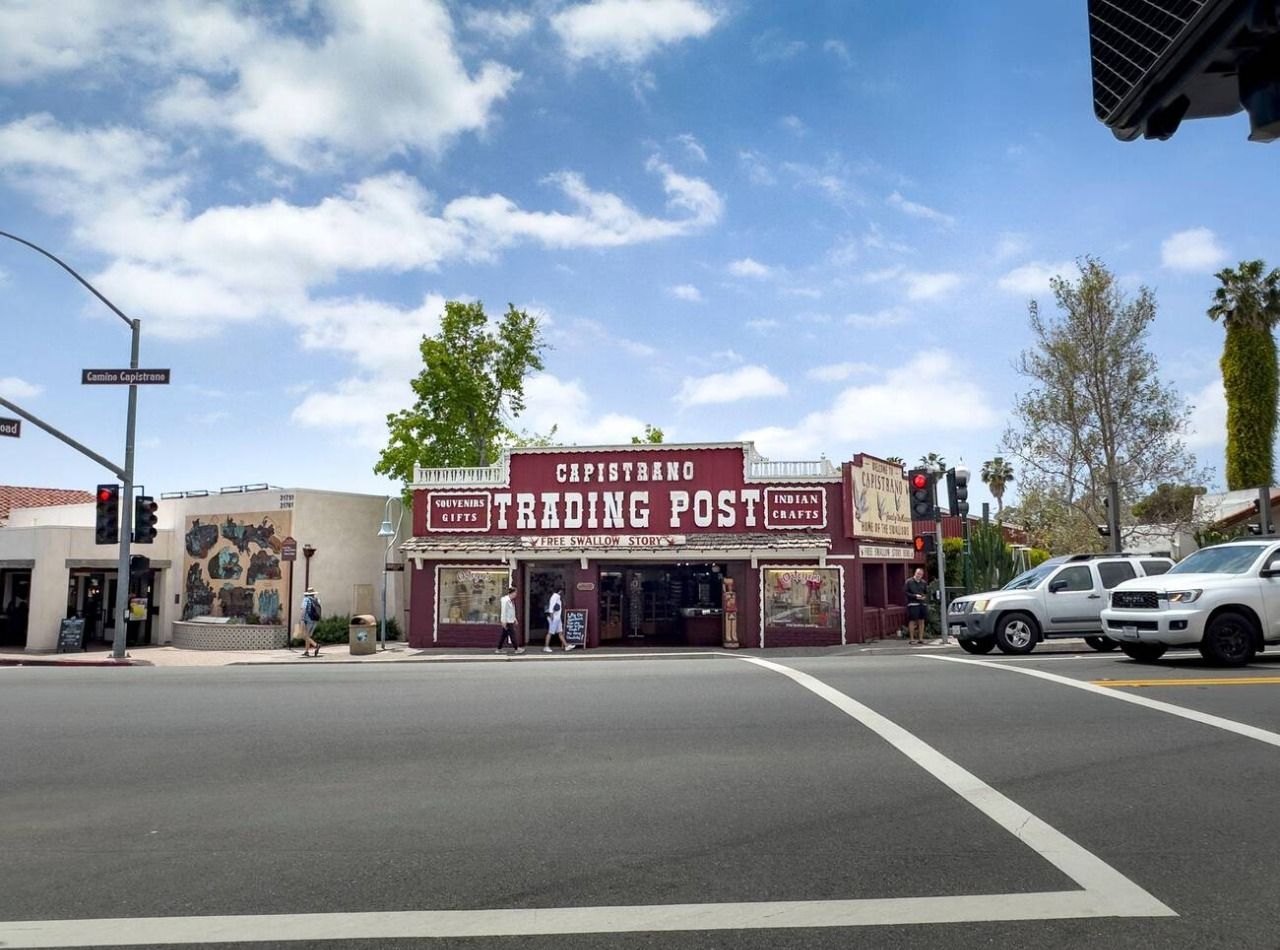
Around it, you have the Rios Adobe (still in family hands after more than 230 years), the O'Neill Museum, the small adobes that make Los Rios the oldest continuously occupied residential street in California. The Ecology Center, with chef Tyler Wells's residency, runs farm dinners that draw people from Los Angeles. Heritage Barbecue, two blocks the other direction, has held a Michelin Bib Gourmand since 2021. The Swallows Inn, the Capistrano Trading Post, El Adobe. These are not new additions. But they are suddenly part of a downtown that has continuous foot traffic, where one stop leads to another instead of one destination and a long quiet street.
What makes downtown San Juan Capistrano different is that the village is real. The adobes are not props. The depot is still a working station. The reinvention is not erasing anything. It is connecting what was already here.
The Depot, the Tracks, and Why Walkability Matters Here
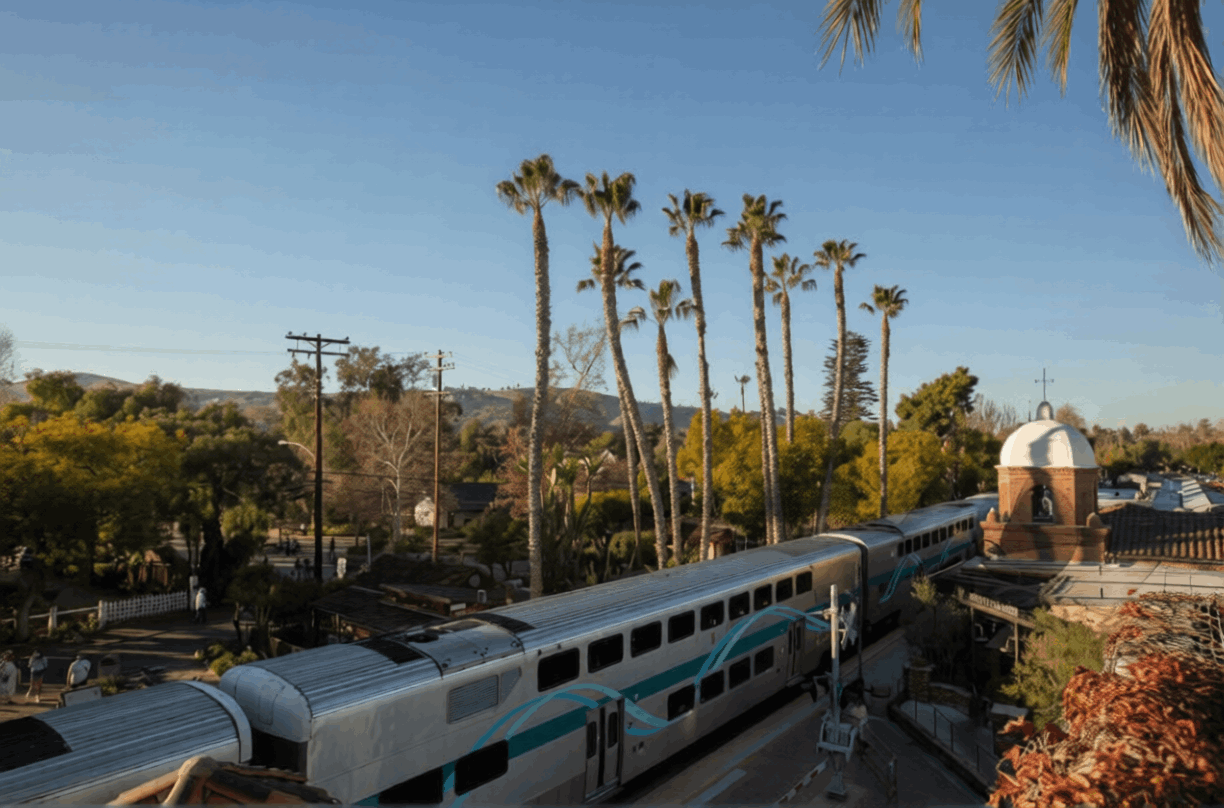
The Capistrano Depot opened in 1894 and was one of the earliest Mission Revival train stations in California. It has been continuously active since Amtrak resumed service in 1974, and it now hosts the Pacific Surfliner and Metrolink's Orange County and Inland Empire–Orange County lines. The clock tower next to it was raised in 2020, and the whole arrangement, depot plus tracks plus marketplace, has become an actual transit-adjacent village core. You can take the train to dinner here from Irvine, from San Diego, from Los Angeles. Very few coastal Orange County downtowns can say that.
Walkability is the underrated variable in all of this. From a home on Calle Aspero, on Camino Capistrano below the freeway, in the historic streets near the Mission, or in any of the small pockets just east of Los Rios, you can be at the marketplace, the depot, Hidden House, the Ecology Center, the Mission, or Heritage Barbecue without ever turning a key. In coastal Orange County, walkable village cores are rare. Walkable village cores that are also Metrolink-adjacent are almost nonexistent.
How Proximity Is Reshaping Demand
Here is what we are watching from a real estate perspective. Buyers who used to focus on the larger gated and master-planned neighborhoods further south, the same ones who would have asked about Talega Golf Community or Cypress Shores, are increasingly asking about downtown San Juan Capistrano homes. Not instead of, but alongside. The profile is changing. Right-sizing Boomers who do not want a fifth bedroom and a four-car garage. Relocating professionals from the Bay Area or Los Angeles who want walkable charm without giving up coastal weather. Second-home buyers who have realized that a village core with a depot and a marketplace is a rarer asset than another canyon-view tract.
The streets immediately around the historic core, especially the older homes east of Los Rios, the small Spanish revivals near the Mission, the cottage-scale properties along Camino Capistrano and the adjoining cross streets, are the ones where you feel the proximity premium most directly. Lot sizes vary. Architecture varies. What unifies these pockets is that they sit inside the walking radius, and that radius is now meaningfully more interesting than it was three years ago. Buyers notice. So do appraisers, eventually.
It is worth being honest about scale. San Juan Capistrano has roughly 36,000 residents, and the historic downtown proper is a small footprint. The number of homes that genuinely qualify as walking-distance to River Street and the depot is finite. Finite supply plus rising demand is the entire pricing thesis here, and it is the reason a number of our recent conversations with buyers have circled back to this corner of the map.
What Is Coming Next
Downtown San Juan Capistrano is not finished. Salida del Sol, the combined affordable-housing and City Hall complex, opened in 2025 and pulled civic activity back into the historic core. The allcove youth wellness center came online the same year. The Mission 250th celebrations have started rolling, with programming building toward 2026. Conversations about how to handle nightlife, land use, and the next round of historic preservation are active and, by all signs, healthy. The village is being shaped, not paved over.
For our clients on the buy side, the question is rarely whether downtown San Juan Capistrano is becoming more interesting. It clearly is. The question is what kind of home, in which pocket, at what price level. For sellers in the historic neighborhoods, the question is how to position a property so that the proximity story is the story. Both conversations are about strategy, not urgency.
Living in Coastal OC is the editorial home of Susan Chase and the Susan Chase Group at Compass, serving buyers, sellers, and relocations across Laguna Beach, Dana Point, Laguna Niguel, San Clemente, and San Juan Capistrano. For private consultations, neighborhood tours, or relocation guidance, contact us at livingincoastaloc.com.
A Final Word from Susan Chase
Downtown San Juan Capistrano is one of the very few places in coastal Orange County where the village core is real, the train still stops, and the walking radius is finally interesting enough to live inside. That combination is rare, and the homes that sit within it are a finite set. The buyers who recognize this early have an advantage. The sellers who can position around the proximity story, rather than the square footage story, do too.
If you are weighing downtown San Juan Capistrano against another part of the coast, or trying to decide whether a historic-core home is the right next move, reach out. I will walk you through the pockets that actually qualify as walking distance, the tradeoffs each one asks, and what current pricing looks like for the homes most directly affected by the new gravity of the core. Strategy matters more here than urgency.
Susan Chase

Susan Chase Group | Compass
Dana Point, California
949-370-6950
susan.chase@compass.com
livingincoastaloc.com
🙋🏼♀️ I’m Susan Chase, your South Orange County Realtor, advisor and guide, helping buyers, sellers, and relocations right-size and find a coastal home and lifestyle they’ll love. ❤️
Categories
- All Blogs (159)
- 2026 Harbor & Coast Reports (3)
- Coastal OC Lifestyle (16)
- Guides (16)
- Into the Weekend with Susan (1)
- Living in Dana Point (20)
- Living in Laguna Beach (20)
- Living in Laguna Niguel (19)
- Living in San Clemente (18)
- Living in San Juan Capistrano (17)
- Micro-Market Deep Dives (5)
- Relocation (3)
- Right Sizing Strategy (6)
- Strategic Market Intelligence (17)
Recent Posts






REVIEWS