
Wildfire, Defensible Space, and Insurance in Laguna Beach's Canyons
What should canyon and hillside buyers in Laguna Beach know about wildfire and insurance?
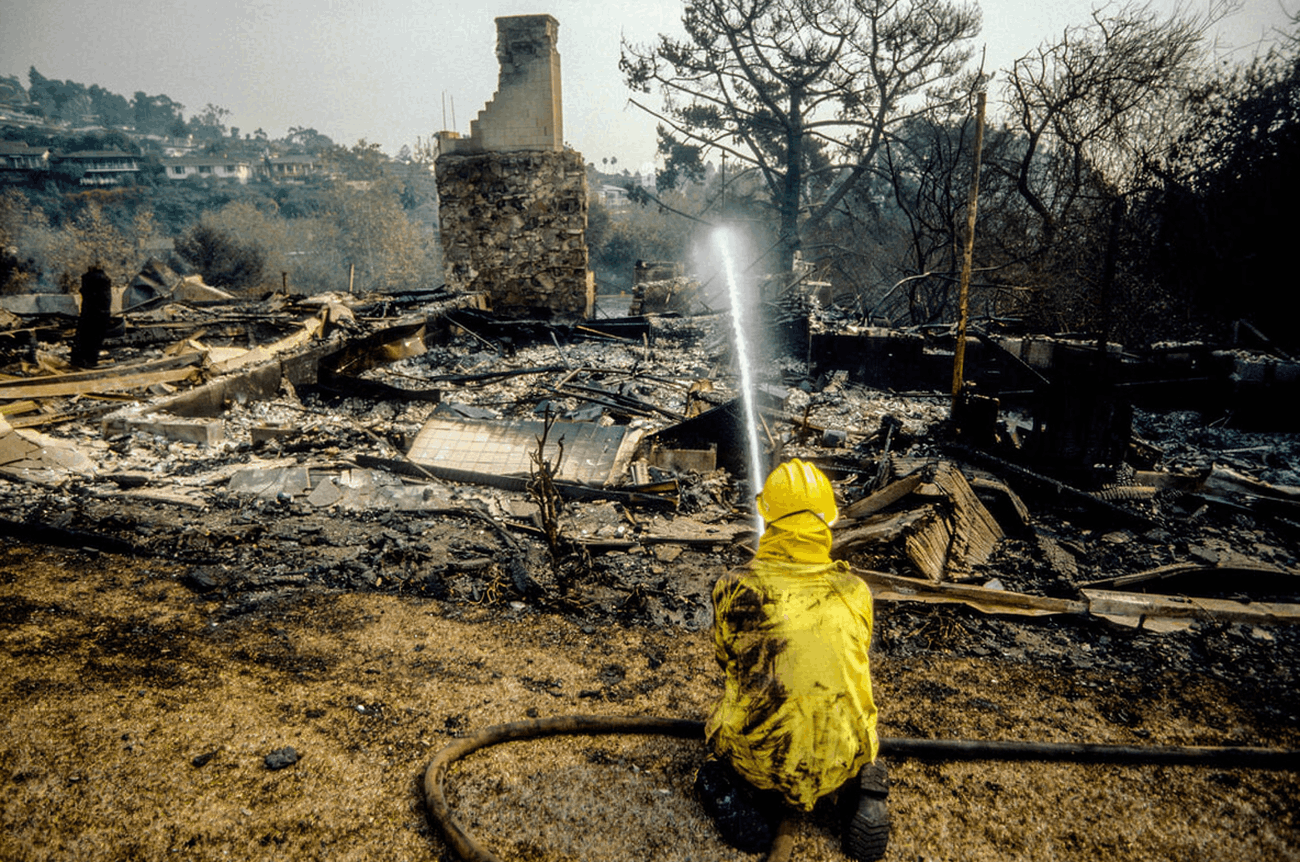
Most of Laguna Beach sits in a Very High Fire Hazard Severity Zone, so canyon and hillside buyers should understand defensible space requirements, the city's place in the wildland interface, and its serious fire history. They should also plan for a tighter, more expensive insurance market than they may expect. The protective move is to verify the specific address's hazard zone, its defensible space compliance, and current insurance availability before removing contingencies.
The canyons are a large part of why people fall in love with Laguna Beach. The wild hillsides, the eucalyptus, and the native brush, the sense that a real piece of Southern California nature starts right at the back fence. That same wildness is also why insurers look hard at this city, and why a canyon or hillside home here comes with a layer of due diligence that a flat inland lot never requires. None of it should scare a buyer off. It should simply be understood and planned for rather than discovered after the offer.
This guide is for buyers looking in Laguna Canyon, Bluebird Canyon, and the hillside streets above the Village, the places where Laguna's beauty and its fire exposure are most tightly braided together. It walks through why the city carries the risk it does, what defensible space actually requires, how fire history shapes coverage and cost, and the verification steps that protect a purchase. For the wider picture of the city and how its micro-geography shapes daily life, start with my honest local guide to living in Laguna Beach.
Why Laguna is a wildfire city
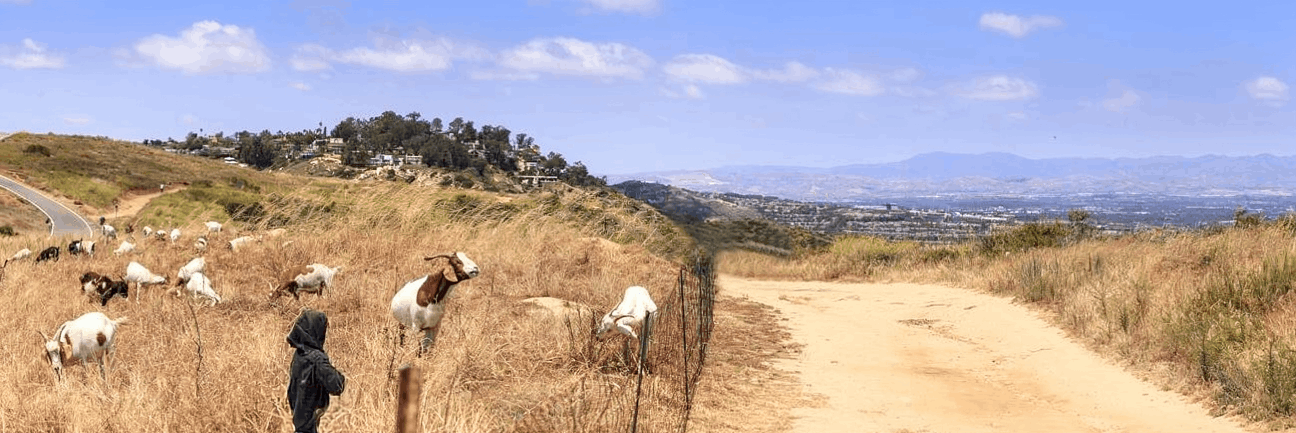
Laguna Beach is a textbook wildland-urban interface community, which is the technical name for a place where homes sit right up against open wildland. The city is ringed and threaded by protected wilderness, Laguna Coast Wilderness Park, Aliso and Wood Canyons, and Crystal Cove among them, and its homes climb steep canyon walls covered in native, fire-adapted vegetation. Add the hot, dry Santa Ana winds that sweep down out of the inland hills in the fall, and you have the exact conditions that produce fast-moving wildfire.
The numbers make the point plainly. According to the city, roughly 87 percent of Laguna Beach's land area falls within the Very High Fire Hazard Severity Zone designated by CAL FIRE, and about 65 percent of the city's buildable property sits inside it. Much of that 87 percent is open space, but the takeaway for a buyer is simple. In Laguna Beach, a canyon or hillside home in the Very High zone is the norm, not the exception, and the city updated its Fire Hazard Severity Zone maps as recently as June 2025. The first thing to know about any specific property is exactly which zone it falls in.
The 1993 fire, and why it still shapes everything
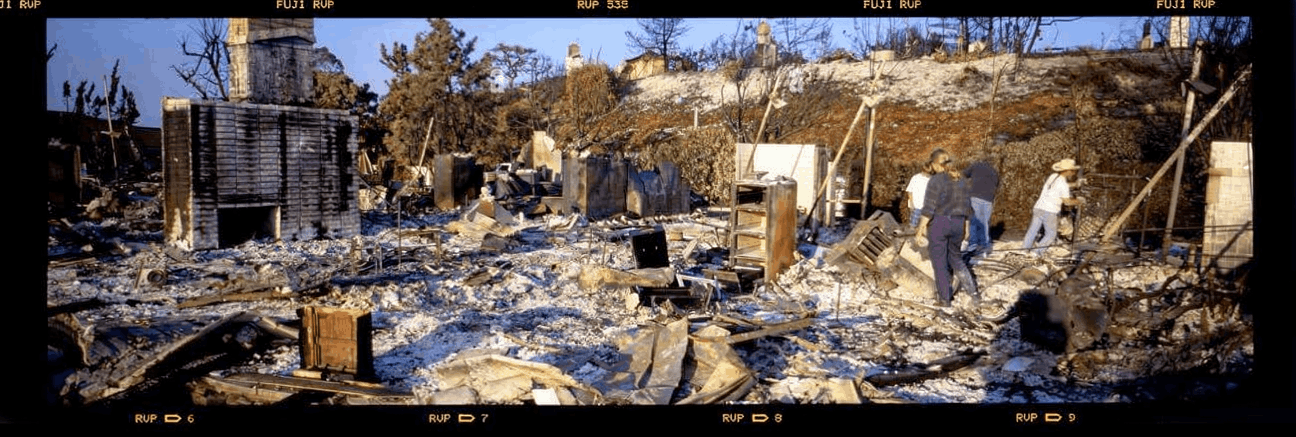
You cannot understand how Laguna Beach treats fire without understanding what happened on October 27, 1993. A fire that began at the mouth of Laguna Canyon was seized by powerful Santa Ana winds and driven toward town at a rate witnesses described as roughly a hundred acres a minute. It leapt the canyon road, burned through the Canyon Acres neighborhood, and climbed up and over into the Mystic Hills residences. By the time the winds finally died, the firestorm had burned some sixteen to seventeen thousand acres, destroyed 366 homes, and damaged hundreds more, with tens of thousands of people evacuated in a single afternoon.
That day is the reason Laguna Beach has one of the more serious local fire programs in the region, and it is part of the reason insurers price this city the way they do. The hazard has not gone anywhere. Brush fires still flare in and around these hillsides, including as recently as 2025, and the combination of terrain, fuel, and wind that drove the 1993 fire is permanent. The lesson the city took from it is the same one a buyer should take. The risk is real, it is manageable with preparation, and it is never zero.
Defensible space, what the rules actually require
Defensible space is the buffer of managed vegetation around a home that slows a fire and gives it a chance to survive, and gives firefighters a chance to defend it. State law requires it for properties in the Very High Fire Hazard Severity Zone, and Laguna Beach layers its own standards on top through the Defensible Space Guideline it adopted by ordinance in 2021. The framework is organized in zones measured out from the house.
The zones
The established requirement runs to 100 feet from the structure, where the lot allows. The zone from 5 to 30 feet, often called lean, clean, and green, calls for well-maintained, well-spaced, well-irrigated planting with dead material removed. The zone from 30 to 100 feet is the reduced-fuel zone, where brush is thinned, and trees are spaced so fire cannot climb or carry easily. California is also phasing in a new Zone 0, the critical ember-resistant five feet immediately around the home, where the goal is to keep anything that can catch a wind-blown ember, plants, mulch, wood fences, stored items, away from the walls entirely. The Zone 0 rules are still being finalized statewide, so the exact compliance timeline for existing homes is worth confirming, but the direction is clear, and that first five feet is the single most important stretch for ember defense.
Laguna's local layer
Beyond clearance, the Laguna Beach Fire Department inspects properties for defensible space and issues a Letter of Compliance once a property meets the requirements. There is also a Laguna-specific wrinkle worth knowing. Because so much landscaping in this city is governed by Design Review, if a home has a Design Review Board-approved landscape plan and meeting the fire requirements would mean significant changes to it, those changes may need to go back through the city's Administrative Design Review process first. It is the kind of overlap that surprises owners, and it is one more reason to understand a property's compliance status going in.
On the building side, California's wildland-urban interface construction code, Chapter 7A, requires ignition-resistant materials and methods for new construction and many remodels in the high-hazard zones. That is the home-hardening side of the equation: ember-resistant vents, fire-rated roofing, enclosed eaves, and it matters as much as the landscaping.
Wildfire and the sale, what gets disclosed
California has built fire risk into the disclosure process, which works in a buyer's favor if you read what you are given. Under a 2019 law, the sale of a home in the Very High Fire Hazard Severity Zone comes with defensible space disclosure obligations, in effect in Laguna Beach since 2021, so the topic is on the table as part of the transaction. The Natural Hazard Disclosure report that accompanies most California sales also states whether the property sits in a designated fire hazard zone. Read both closely, and ask specifically about the property's defensible space status and whether the Fire Department has issued a Letter of Compliance. And independent of the seller's paperwork, look the address up yourself on the city's current Fire Hazard Severity Zone map so you know its exact designation rather than a general impression.
The insurance reality in 2026
This is the part that has changed the most, and the part worth the most careful attention, so treat what follows as the lay of the land in 2026 rather than a fixed quote. California's home insurance market has been under real strain. Over the past decade, a number of major insurers pulled back from high fire risk areas and declined to renew some policies, which pushed many owners toward the California FAIR Plan, the state's insurer of last resort. FAIR Plan coverage is basic fire coverage, and owners often pair it with a separate wrap-around policy to cover the things it leaves out, such as liability and water damage. The destructive Los Angeles fires in early 2025 put further stress on the whole system.
The picture is not all hard news, though. The state's Sustainable Insurance Strategy, finalized in 2025, now requires insurers that use modern catastrophe modeling in their rate filings to write a minimum share of their business in wildfire-distressed areas, with the explicit goal of moving homeowners off the FAIR Plan and back into the regular market, and there are early signs that private coverage is loosening at the margin. Just as important for an individual buyer, mitigation increasingly counts. Under the state's framework, insurers are expected to recognize and discount for wildfire mitigation, so defensible space, home hardening, and the steps a community takes can affect both whether a home can be insured and what it costs.
What all of this means for a Laguna Canyon buyer is concrete. Do not assume coverage will be easy or cheap, and do not wait until the end of escrow to find out. Get an insurance quote for the specific address early, while you still have your contingencies, because availability and price vary property by property and can move a budget meaningfully. And because the rules and the market are genuinely in motion right now, confirm the current situation for your exact address with a licensed insurance broker rather than relying on any general description, including this one.
How to protect a canyon or hillside purchase
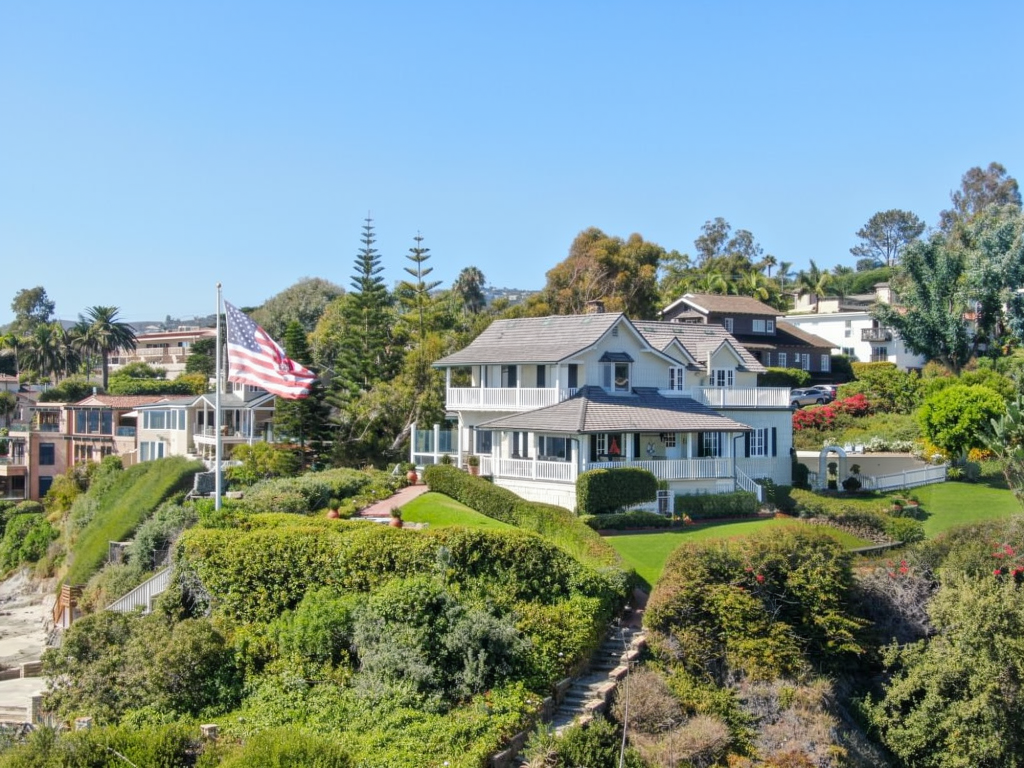
The due diligence here is very doable; it just has to actually happen. Look the address up on the city's current Fire Hazard Severity Zone map and confirm its designation. Ask for the property's defensible space status and whether a Letter of Compliance has been issued, and read the Natural Hazard Disclosure and the fire-related disclosures rather than skimming them. Walk the lot with fire in mind, noting how close brush and trees sit to the structure and how much of that first five feet and that first hundred feet is already managed. Ask what home hardening the house already has, such as ember-resistant vents, a fire-rated roof, and what it would cost to add what it lacks. And run the insurance question early, getting a real quote for the specific address while contingencies protect you, then build that cost into your budget alongside the mortgage rather than treating it as an afterthought. Do those things, and a canyon home stops being a leap of faith and becomes a clear-eyed decision.
Quick Facts
| Topic | What buyers should know |
|---|---|
| Fire hazard zone | Roughly 87 percent of Laguna Beach's land and about 65 percent of its buildable property is in the Very High Fire Hazard Severity Zone. The city updated its zone maps in June 2025 |
| Wildland interface | The city sits against Laguna Coast Wilderness Park, Aliso and Wood Canyons, and Crystal Cove, on steep terrain with fire-adapted vegetation and seasonal Santa Ana winds |
| Fire history | The October 1993 firestorm began at the mouth of Laguna Canyon, burned through Canyon Acres and Mystic Hills, and destroyed 366 homes across roughly 16,000 to 17,000 acres |
| Defensible space | Required in the Very High zone. Zones run to 100 feet, with an emerging Zone 0 covering the critical first five feet. Laguna adds its own guidelines and issues a Letter of Compliance |
| Home hardening | California's Chapter 7A requires ignition-resistant construction for new builds, and many remodels in high-hazard zones |
| Disclosure | Defensible space disclosure applies to Very High zone sales, and the Natural Hazard Disclosure states whether a property is in a fire hazard zone |
| Insurance, 2026 | A tighter, costlier market. The FAIR Plan is the last resort, often paired with a wrap-around policy. Reforms and mitigation discounts are reshaping access. Verify the specific address early |
Frequently Asked Questions
Is all of Laguna Beach in a fire hazard zone?
Close to it. The city reports that roughly 87 percent of its land area is in the Very High Fire Hazard Severity Zone, and about 65 percent of its buildable property sits inside it, so a canyon or hillside home in the Very High zone is the norm here. The exact designation still varies by parcel, and the city updated its maps in June 2025, so look up the specific address on the city's current map rather than assuming.
What is defensible space and is it required in Laguna Beach?
Defensible space is the managed buffer of vegetation around a home that slows a fire and gives it a chance to survive. State law requires it for properties in the Very High Fire Hazard Severity Zone, and Laguna Beach adds its own Defensible Space Guideline on top, with the Fire Department inspecting and issuing a Letter of Compliance. The zones extend to 100 feet, and California is phasing in a Zone 0 covering the critical first five feet around the structure.
Can you get home insurance in Laguna Beach's canyons?
Often yes, but it has become harder and more expensive, and it varies property by property. Some owners use the California FAIR Plan, the insurer of last resort, frequently paired with a separate wrap-around policy. State reforms in 2025 are pushing insurers to write more in wildfire-distressed areas, and mitigation steps like defensible space and home hardening increasingly help. Because the market is changing quickly, get a quote for the specific address early in escrow and confirm current options with a licensed broker.
Did the 1993 fire affect Bluebird Canyon?
The 1993 firestorm is most associated with the area from the mouth of Laguna Canyon through Canyon Acres and up into Mystic Hills, rather than Bluebird Canyon specifically. That said, Bluebird Canyon and the other canyon and hillside areas of Laguna Beach sit largely within the Very High Fire Hazard Severity Zone, so the same defensible space, home hardening, and insurance considerations apply across the canyons regardless of where any single past fire burned.
A Final Word from Susan Chase
I never want a buyer to be afraid of Laguna's canyons, because they are among the most beautiful places to live in California. What I want is for buyers to go in with their eyes open. The fire risk here is real and permanent, but it is also well understood and well managed, and a home that has been hardened and given proper defensible space stands a genuinely different chance than one that has been neglected. The work is to know which one you are buying, and to settle the insurance question before you are committed rather than after.
If you are looking at a home in Laguna Canyon, Bluebird Canyon, or the hillside streets above the Village and want help reading the fire-zone designation, the defensible space status, and the real insurance picture for that specific address, reach out. I will help you do the due diligence properly so the canyon home you love is also a home you can confidently own. You can reach me at the contact below whenever you are ready to talk.
Living in Coastal OC is the editorial home of Susan Chase and the Susan Chase Group at Compass, serving buyers, sellers, and relocations across Laguna Beach, Dana Point, Laguna Niguel, San Clemente, and San Juan Capistrano. For private consultations, neighborhood tours, or relocation guidance, contact us at livingincoastaloc.com.

Susan Chase Group | Compass
Dana Point, California
949-370-6950
susan.chase@compass.com
livingincoastaloc.com
🙋🏼♀️ I’m Susan Chase, your South Orange County Realtor, advisor and guide, helping buyers, sellers, and relocations right-size and find a coastal home and lifestyle they’ll love. ❤️
Sources & Data Verification. Laguna Beach's share of land and buildable property within the Very High Fire Hazard Severity Zone, the city's Wildfire Mitigation and Vegetation Management and Fuel Break programs, the Defensible Space Guideline adopted by Ordinance 1664 in 2021, Fire Department defensible space inspections and Letters of Compliance, the Design Review interplay for landscape changes, and the 2025 Local Responsibility Area Fire Hazard Severity Zone maps adopted June 24, 2025: City of Laguna Beach Fire Department and official city references. Fire Hazard Severity Zone framework, defensible space zones including the emerging Zone 0 ember-resistant zone, and home hardening under the wildland-urban interface building code (Chapter 7A): CAL FIRE Office of the State Fire Marshal and California Board of Forestry and Fire Protection references, with Zone 0 regulations for existing structures still being finalized statewide as of this writing. Defensible space disclosure for sales in the Very High zone under 2019 Assembly Bill 38 and the Natural Hazard Disclosure requirement: California Association of Realtors and California statute references. The 1993 Laguna Beach firestorm details, including its ignition at the mouth of Laguna Canyon on October 27, 1993, its path through Canyon Acres and Mystic Hills, approximately 366 homes destroyed and hundreds damaged across roughly 16,000 to 17,000 acres: historical fire records and contemporaneous accounts. California insurance market conditions for 2026, including private insurer pullback and non-renewals, the California FAIR Plan as insurer of last resort and the use of wrap-around Difference-in-Conditions policies, the Sustainable Insurance Strategy and its requirement that insurers write a minimum share in wildfire-distressed areas, and mitigation-based discounts: California Department of Insurance and industry references. Insurance availability, pricing, regulations, and FAIR Plan terms are changing rapidly and vary by property, and nothing here is a quote or a guarantee of coverage. Fire hazard zone designations, defensible space requirements, building codes, and insurance options change over time and differ by parcel. Confirm the specific property's hazard zone, defensible space and compliance status, and current insurance availability and cost with the City of Laguna Beach, CAL FIRE resources, and a licensed insurance broker before making a purchase decision. This article is educational and is not legal, insurance, or professional risk advice.
REVIEWS